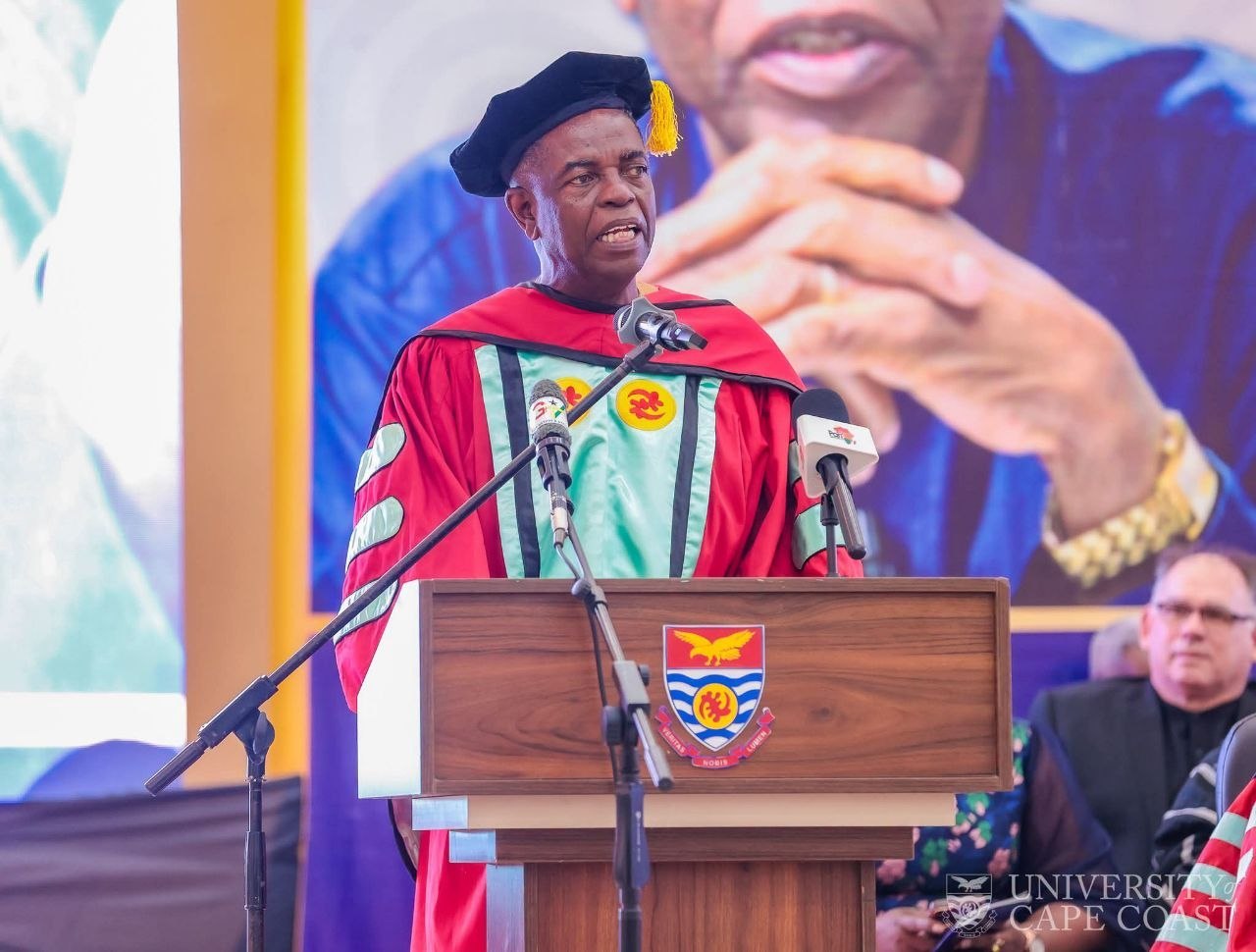
A veteran journalist and Pan-African intellectual Kwesi Pratt Jnr., a Coordinating Committee member of the Pan-African Progressive Front (PPF), has declared that Africa’s liberation remains incomplete without socialism, economic sovereignty and the political unity of the continent.
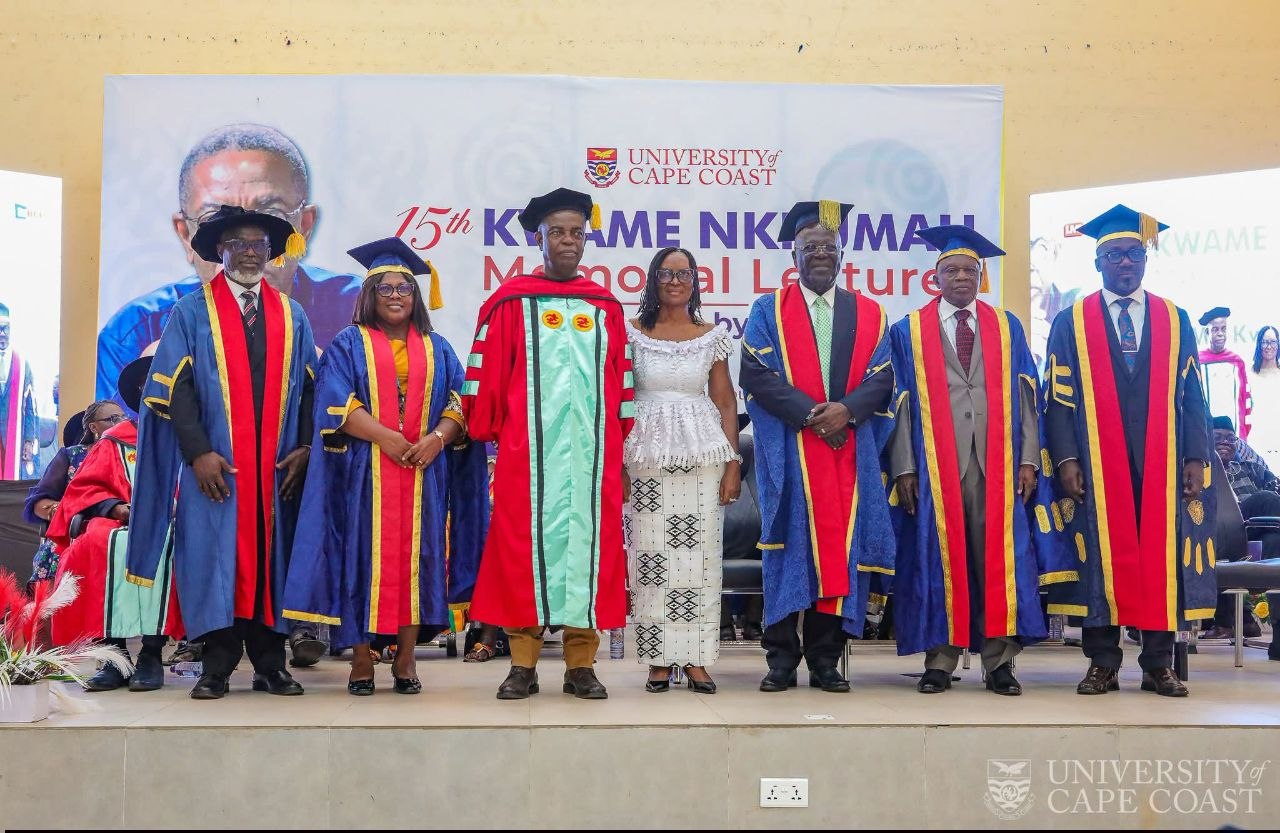
Pratt made the call during the 15th Kwame Nkrumah Memorial Lectures at the University of Cape Coast (UCC), where he delivered a keynote lecture under the theme Kwame Nkrumah: Yesterday, Today and Tomorrow: Perspectives on Constitutionalism, Development and Pan-Africanism. Following the lecture, the university conferred upon him the honorary degree of Doctor of Letters (D.Litt.), honoris causa in recognition of his decades of contribution to journalism, political education and Pan-African thought.
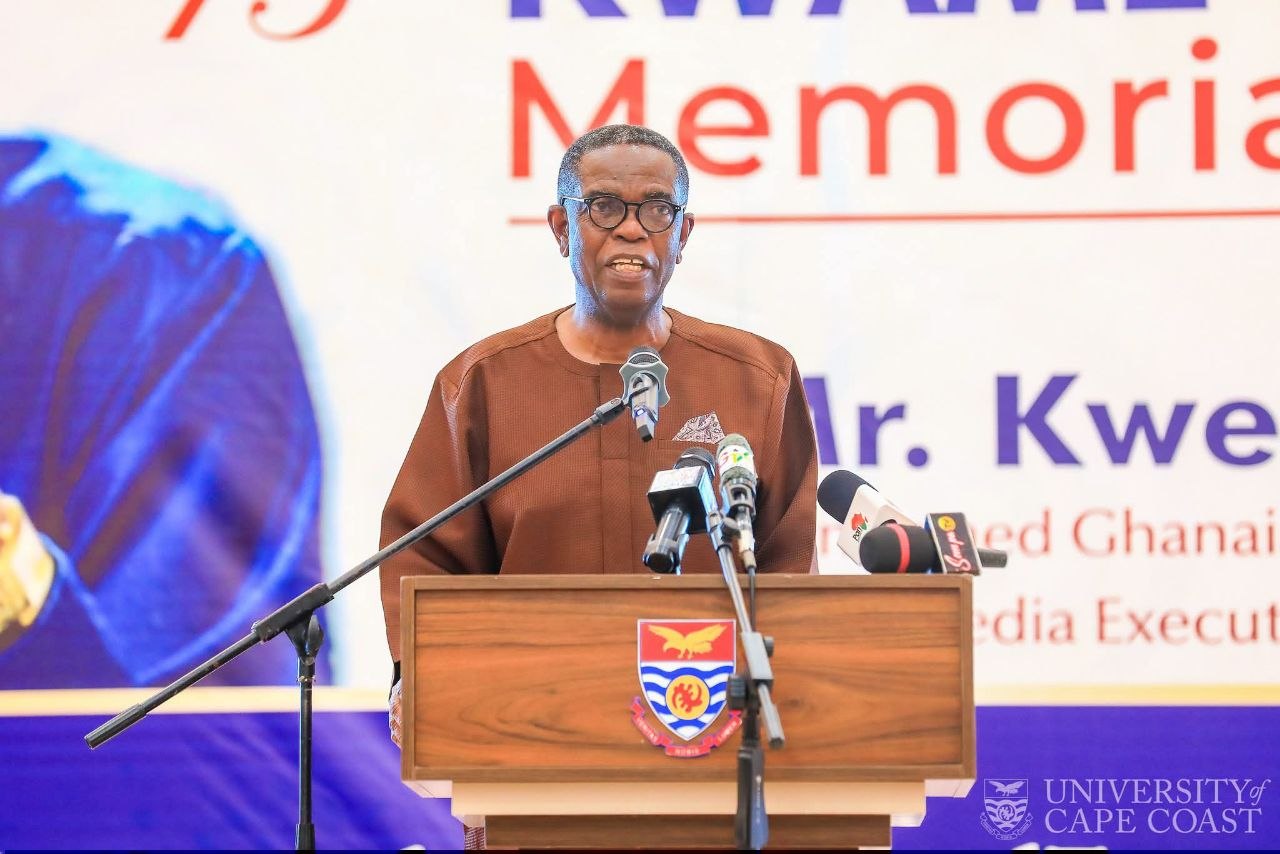
Nkrumah’s revolutionary project remains unfinished
Addressing students, academics, traditional leaders and Pan-Africanists, Pratt argued that Kwame Nkrumah’s greatest legacy was not simply leading Ghana to independence but developing a revolutionary strategy that united national liberation with the struggle for a politically and economically united Africa.
He rejected attempts to reduce Nkrumah’s legacy to monuments and ceremonial remembrance, insisting that the real task of the present generation is to complete the unfinished struggle against imperialism, colonial dependency and capitalist exploitation.
Pratt maintained that Ghana’s independence was conceived as the opening chapter of a continental revolution, stressing that no African nation can achieve genuine freedom while the continent remains divided, economically dependent and vulnerable to foreign domination.
Pan-Africanism must become economic power
Central to Pratt’s lecture was the argument that Pan-Africanism is not merely a cultural ideal but a political and economic programme rooted in the interests of workers, peasants, youth and oppressed peoples.
He criticized Africa’s continued role as an exporter of raw materials while importing manufactured goods, describing the continent’s fragmented markets, competing national economies and dependence on foreign finance as enduring features of neo-colonialism.
According to Pratt, Africa must industrialize through public investment, continental planning and democratic control over its natural resources. He called for integrated railway networks, shared energy systems, African-controlled financial institutions and coordinated strategies in technology, science and industrial development.
“Africa must produce what it trades,” he declared, warning that free trade without productive capacity simply expands markets for foreign capital rather than creating African prosperity.
The 1966 coup and the struggle against imperialism
Pratt devoted a significant portion of his address to the overthrow of President Kwame Nkrumah on 24 February 1966, arguing that the coup represented a decisive attack on Africa’s revolutionary project.
Drawing on declassified historical records, he contended that imperialist powers viewed Nkrumah’s commitment to African liberation, non-alignment and socialist development as a threat to their strategic and economic interests. He argued that the removal of Nkrumah interrupted Ghana’s Seven-Year Development Plan, weakened state-led industrialization and dealt a major blow to the movement for immediate African political union.
For Pratt, the lesson of 1966 is that political sovereignty cannot survive without economic sovereignty and continental solidarity.
Universities must serve the people
Turning to the role of higher education, Pratt challenged African universities to become centres of scientific innovation, technological production and revolutionary thought rather than institutions that merely produce certificates.
He argued that education must develop critical consciousness and practical skills capable of transforming Africa’s productive forces, strengthening public institutions and advancing social justice.
Building the Nkrumaist future
In his concluding remarks, Pratt called on a new generation of Africans to organize around the principles of constitutional democracy, industrial development, social equality and continental unity.
He insisted that the future of Africa cannot be built through nostalgia but through the democratic renewal and modernization of Nkrumah’s revolutionary vision, concluding that the highest aspirations of African liberation are achievable only through socialism.
The lecture ended with a standing ovation as Pratt declared:
“There is victory for us, and no force can stop us.”
A proud moment for the Pan-African movement
The conferment of the honorary Doctor of Letters on Kwesi Pratt Jnr. is a recognition of more than five decades of unwavering commitment to progressive journalism, anti-imperialist struggle and Pan-African political education.
For the Pan-African Progressive Front, the honour celebrates one of Africa’s foremost voices whose lifelong work continues to inspire the struggle for reparatory justice, socialist transformation and the total liberation of the African continent.