The demand for reparatory justice has reached a point where declarations and expressions of regret can no longer stand as meaningful progress on their own. The central challenge is how to translate historical recognition into political, legal and economic action capable of addressing the enduring consequences of slavery and colonial exploitation.
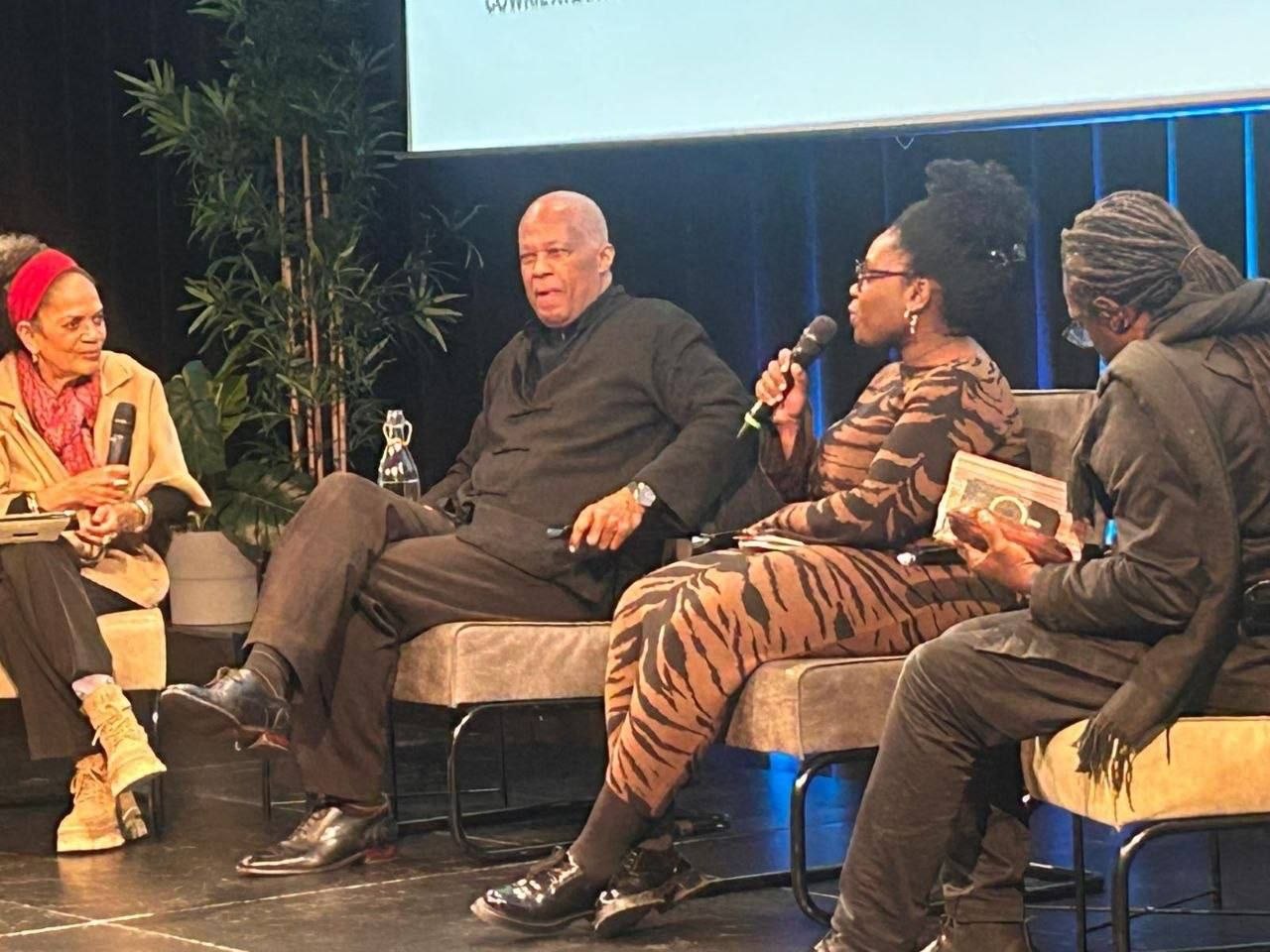
This was the defining concern at Reparations – A Dialogue of Decency, organised by the Cowrie Atlantic Foundation at Pakhuis de Zwijger in Amsterdam on 13 November 2026, where Professor Sir Hilary Beckles delivered the keynote address. The discussion brought together approximately 70 participants, most of them from Caribbean communities, including Curaçao, Aruba and Jamaica, alongside Dutch participants.
Slavery as Organised Economic Accumulation
Beckles placed the transatlantic slave trade within the history of organised economic accumulation. Chattel slavery, he explained, was not simply a system of forced labour. It was one in which African people were legally transformed into property: they could be bought, sold, leased, mortgaged, insured and used as currency. Their bodies and labour became assets within an economic system that enriched merchants, financial institutions, plantation owners and European states.
He also challenged the notion that slavery persisted because societies were unaware of its brutality. Even as people condemned it as immoral and criminal, governments continued to protect the commercial and strategic interests built around it. In his words, “national interest” repeatedly took precedence over moral considerations. The wealth generated through slavery was not incidental to European development. It was accumulated through a system deliberately organised to extract African labour and transfer its benefits elsewhere.
Emancipation Was Won, Not Granted
Beckles argued that the history of emancipation must be understood through the resistance of enslaved Africans, not presented as a gift from European governments. Across the Caribbean, generations of enslaved people fought against their bondage, and the Haitian Revolution marked a decisive rupture in the colonial order. Beckles described Haiti as a “magnet of freedom”, a reflection of the inspiration its revolution offered to enslaved people far beyond the island.
He also returned to a less acknowledged part of this history: the demands by enslaved Africans for compensation for the labour taken from them. Their argument was that they had a right to benefit from “the fruits of their labour.” Yet the governments that had permitted and profited from their enslavement rejected those demands, presenting emancipation itself as sufficient compensation. The injustice was compounded by the very legal system that had classified Africans as property. People whose humanity had been denied were then obstructed from seeking redress for the wealth extracted from their lives.
This history shows that reparations are not a new demand emerging from contemporary political debate. They have roots in the struggle against slavery itself. The question is why the demands of those who endured the system were rejected, while the wealth accumulated by those who benefited from it was allowed to endure.
Beyond Cheques: Development and Self-Determination
For Beckles, reparatory justice must confront the material conditions that survived formal emancipation and colonial rule. He rejected the idea that reparations amount merely to the transfer of money or the writing of compensation cheques. Instead, he pointed to the need to support the development, institutional capacity and self-determination of societies whose resources and labour were extracted for centuries.
Reflecting on the relationship between the Netherlands and its Caribbean territories, he challenged the prospect of granting political independence without addressing the economic inequalities and institutional weaknesses inherited from colonial rule. He proposed that the Netherlands guarantee sustained support for infrastructure, healthcare and other essential services as these territories pursue self-determination. In one of the address’s most striking formulations, he said: “We own you for 200, we will stabilise you for 20.” The line exposed a basic contradiction: colonial powers exercise control over territories for generations, then leave them to confront the consequences without adequate support.
Beckles also called for a summit under the United Nations or another credible international institution, bringing together Europe, the Caribbean and Africa to begin a serious process of negotiation. He described reparations as “a dialogue of enlightenment”, a process through which Caribbean societies could rebuild dignity and confidence while former colonial powers accepted responsibility for their histories. Such a dialogue, however, must lead to concrete commitments. Apologies cannot substitute for the redistribution of resources, the restoration of what was taken, or the conditions necessary for genuine economic independence.
Who Drives the Process? The Role of Africa and Civil Society
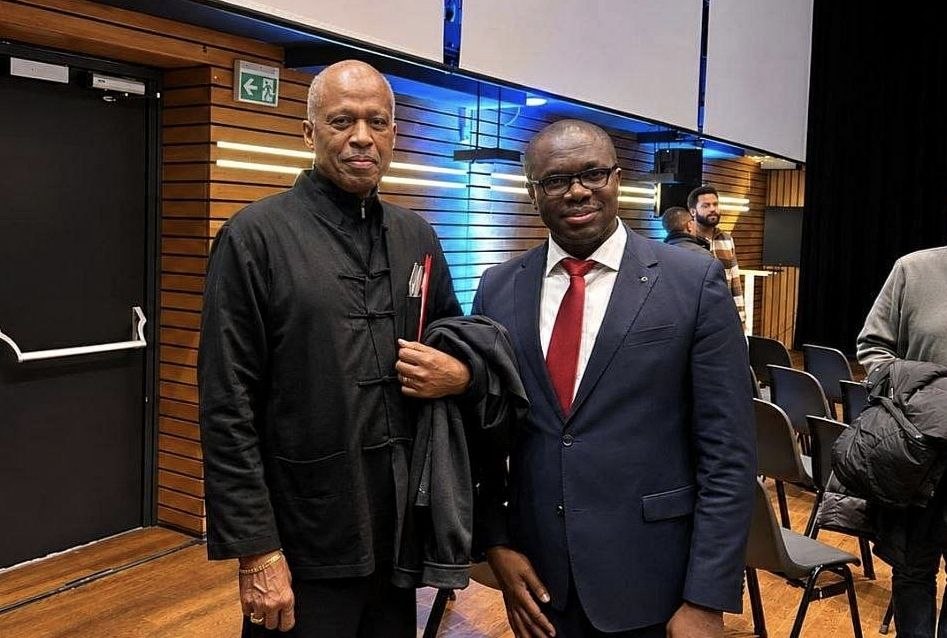
The Amsterdam discussion also raised the question of who should drive this process. The Pan-African Progressive Front (PPF) was represented by Comrade Gbati Zoumaro, spokesperson for La Gauche Neuve du Togo (New Left of Togo) and a member of the PPF. His account of the event highlighted the emotional significance of reparations for Caribbean participants and the need for stronger solidarity from the African continent. Zoumaro also used the occasion to advance the organisation’s campaign for the restitution of African cultural heritage. He displayed a QR code providing information on African artefacts held at the British Museum and encouraged participants to sign on to the campaign for their return. According to Zoumaro, almost everyone present did so, demonstrating strong support for the initiative. The exercise formed part of the PPF’s broader effort to challenge the continued retention of African cultural property in foreign institutions and to mobilise public support for the recovery of the continent’s stolen heritage.
In a brief exchange after the keynote, Zoumaro asked Beckles whether Caribbean communities felt supported by Africa. According to Zoumaro, Beckles acknowledged that support existed but called for greater involvement from African populations and civil society. The appeal is significant because reparatory justice cannot depend exclusively on diplomatic engagement between governments. African and Caribbean movements, universities, legal institutions, civic organisations and diaspora communities all have a role in building public pressure and keeping the issue on the political agenda.
From Recognition to Material Change
Recent developments have created important openings. These include the adoption of United Nations General Assembly Resolution A/RES/80/250 on 25 March 2026, supported by 123 countries, and the announcement in Accra in June of three global panels on reparatory justice, cultural restitution and legal pathways. But institutional announcements must be followed by sustained work.
Key questions remain unresolved: how reparations will be calculated, who will advance and negotiate claims, how resources will be administered, and how the benefits will reach affected communities. So too does the wider struggle for a stronger African voice in international decision-making, including at institutions such as the United Nations Security Council.
The historical debt cannot be settled through declarations alone, nor can its consequences be addressed through the goodwill of former colonial powers. Moving reparatory justice from recognition to material change will take organised political pressure, legal and diplomatic action, and a united effort by African and Caribbean peoples.