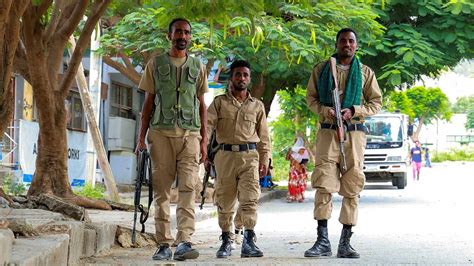
Ethiopia is once again standing at the edge of war. The fall of Mekelle to Ethiopian federal forces on October 4, following the withdrawal of Tigrayan forces from the city, has not ended the fighting. Airstrikes and artillery attacks have continued in parts of Tigray, with humanitarian sources reporting civilian casualties. The renewed conflict has already raised fears of a return to the devastating 2020-2022 war. For the people of Ethiopia, this is not an abstract geopolitical contest. It is the possibility of another war imposed upon communities that have already endured mass displacement, hunger, destruction and death. The question before Africa must therefore be bigger than who controls Mekelle.
Why is Ethiopia at war again? Who benefits from the militarisation of the Horn of Africa? And what happens when an internal African conflict becomes another battlefield for competing regional and global powers?
Ethiopia Cannot Afford Another War
The 2022 Pretoria agreement ended the previous Tigray war, but it did not resolve all of the political and security questions that produced the conflict. The renewed fighting began on September 23, when Tigrayan forces launched attacks and seized several airports. Federal forces subsequently moved against Tigrayan positions and have now regained Mekelle. The TPLF has said its withdrawal from the city was intended to prevent further destruction. Whatever political calculations lie behind the actions of the different armed forces, ordinary Ethiopians will pay the price.
The previous war demonstrated what happens when political disputes become militarised. The conflict from 2020 to 2022 caused an enormous humanitarian catastrophe, with estimates of hundreds of thousands of deaths and massive displacement. The renewed fighting therefore represents more than a political disagreement between competing elites.
It threatens to reopen one of Africa's most destructive conflicts.
A progressive response cannot be built around choosing one armed faction over another.
It must begin with the Ethiopian people.
The Return of the Regional Proxy War
The most dangerous feature of the current crisis is that Ethiopia's internal conflict is increasingly connected to rivalries beyond its borders. Ethiopia has accused Eritrea, Sudan and Egypt of supporting forces opposed to the federal government. All three have rejected those accusations. At the same time, Ethiopia and Eritrea have now severed diplomatic relations after Addis Ababa expelled Eritrean diplomats and closed its embassy in Asmara.
This matters because the Horn of Africa is not simply a collection of separate national conflicts. The region has become a strategic arena connecting the Red Sea, the Gulf of Aden, the Nile Basin and the wider Middle East. Competition over ports, shipping routes, water, military access and political influence increasingly intersects with conflicts in Ethiopia, Sudan, Somalia and Yemen.
External powers have significant interests in this environment. The United Arab Emirates has developed close strategic relations with Ethiopia and was a major source of military support for the Ethiopian government during the previous Tigray war. Egypt has deep strategic concerns over the Nile and Ethiopia's Grand Ethiopian Renaissance Dam while also strengthening its relationship with Eritrea. Saudi Arabia has cultivated relations across the region. Turkey, Israel, the United States and other powers also maintain important strategic interests in the Horn and Red Sea.
This is precisely why Africa must be extremely cautious. When African conflicts become connected to the strategic calculations of external powers, the interests of African peoples can quickly become secondary to the interests of states seeking military, economic or geopolitical advantage.
Africa Must Reject the Logic of Proxy War
There is a long history of African conflicts being transformed by outside intervention. During the Cold War, African territory became a battlefield for rival global powers. Governments and liberation movements were armed, financed and manipulated according to strategic interests that frequently had little to do with the aspirations of African peoples.
The formal colonial era ended, but the underlying geopolitical logic did not disappear. Today, foreign powers compete over African ports, minerals, military facilities, energy resources and strategic corridors. Gulf monarchies have expanded their influence across the Horn. Western powers maintain security partnerships. China has expanded its economic presence. Russia has sought greater strategic influence in parts of Africa. The actors are different. The fundamental problem remains familiar:
Africa must not become the battlefield on which other powers settle their strategic disputes.
This is not an argument that Africa should isolate itself from the world. It is an argument for sovereignty. African states have the right to establish economic, diplomatic and security relations with whichever countries they choose. But those relationships must strengthen African sovereignty rather than create new forms of dependency. Military assistance that turns African states into instruments of another country's regional strategy does not constitute genuine sovereignty.
The United States Cannot Be Allowed to Define the Solution
Washington has called for restraint and dialogue as the crisis has intensified. The United States has also warned Ethiopia and Eritrea against further escalation. But Africa should be cautious about accepting a familiar pattern in which external powers present themselves as indispensable arbiters of African conflicts. The answer to Ethiopia's crisis cannot be for Washington, European governments or any other external power to decide which Ethiopian political forces deserve support. Nor should Africa replace one external patron with another. The principle must be consistent:
Ethiopia's future must be determined by Ethiopians.
External powers should not arm, finance or manipulate competing factions in ways that deepen the conflict. International actors should support humanitarian assistance, diplomacy and peacebuilding rather than militarisation.
The African Union Must Do More
The African Union has already called on Ethiopia, Eritrea and Egypt to exercise maximum restraint and resolve their differences through diplomatic channels. On October 4, the AU reiterated its commitment to sovereignty, territorial integrity, non-interference and political solutions, stressing that military solutions must not prevail.
This is important. But statements alone will not stop another war. The African Union needs to use its political authority to push for an African-led diplomatic process capable of addressing both the Ethiopian conflict and the regional tensions surrounding it. The Horn cannot be treated as a collection of disconnected crises. The wars in Ethiopia and Sudan, tensions between Ethiopia and Eritrea, the Nile dispute, instability in Somalia and competition over the Red Sea are increasingly interconnected. An African peace initiative must therefore look beyond the immediate battlefield.
The Left Must Reject Ethnic Militarism
There is another uncomfortable truth that must be confronted. A progressive response to Ethiopia cannot simply reproduce the politics of ethnic militarisation. The Ethiopian people are not identical with the Ethiopian federal government. Tigrayans are not identical with the TPLF. Eritreans are not identical with the Eritrean government. Egyptians are not identical with the Egyptian state.
Ordinary people should not be turned into instruments of political elites. The politics of liberation must be distinguished from the politics of competing ruling classes and armed organisations. A genuine progressive movement must defend the right of Ethiopia's different peoples to political participation, equality, security and self-determination while opposing the use of ethnic identity as a justification for permanent militarisation. The solution to Ethiopia's political crisis cannot be another cycle of armed mobilisation followed by another fragile peace agreement. It requires a political settlement that addresses the grievances and democratic aspirations of the country's diverse populations.
No to War, No to Foreign Manipulation
The renewed Ethiopian conflict comes at a dangerous moment for Africa. Sudan remains engulfed in war. Somalia continues to face serious security challenges. The Red Sea has become increasingly militarised. Regional governments are competing for influence while external powers pursue their own strategic interests. A new Ethiopian war could therefore become much larger than Ethiopia.
That is why the African peace movement, progressive organisations, trade unions, student movements and civil society must raise their voices now. The demand should be clear:
No to another Ethiopian war.
No to foreign manipulation of African conflicts.
No to proxy wars on African soil.
Yes to an African-led political settlement.
Yes to the sovereignty and territorial integrity of Ethiopia and all African states.
The African Union's own position is that political solutions must prevail over military solutions. That principle must become more than diplomatic language. Africa has paid an enormous price for allowing its internal divisions to become opportunities for external powers.
The people of Ethiopia should not be asked to pay that price again. The task of African progressives is not to choose which foreign power should dominate the Horn of Africa. It is to defend the right of African peoples to determine their own future.
Ethiopia does not need another proxy war. Ethiopia needs peace, sovereignty, democracy and a political settlement that puts its people before the interests of competing elites and foreign powers.
The time to prevent another catastrophe is now.