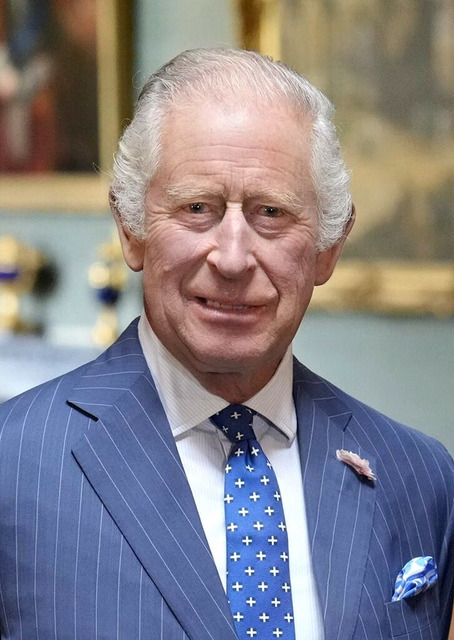
At the opening of the Commonwealth Heads of Government Meeting (CHOGM) in St John's, Antigua and Barbuda, on 3 November, King Charles III spoke of the horror and profound sorrow associated with the transatlantic slave trade. Yet, once again, the British monarchy offered expressions of regret without accepting the obligations that should follow from acknowledging such crimes. There was no formal apology, no commitment to reparations and no proposal to address the enormous economic and social damage inflicted on Africa and the Caribbean through centuries of enslavement and colonial exploitation.
The British position was made even clearer that same week when Prime Minister Andy Burnham indicated that the UK was open to a formal apology while ruling out financial reparations.
This is the familiar British position: acknowledge the suffering, express sorrow, offer development assistance if necessary, but refuse to confront the question of historical debt. Britain wants the moral credit of acknowledging slavery without accepting the material consequences of its own history. It wants reconciliation without restitution and dialogue without accountability.
But the reparations movement has moved beyond the politics of apology. Africa and the Caribbean are no longer asking Britain to demonstrate that it feels sufficiently sorry. They are demanding that the historical relationship between exploitation and accumulated wealth be confronted, and that the consequences of that relationship be addressed.
THE SAME WORDS, FOUR YEARS OF EVASION
The King's remarks in Antigua were not a departure from his previous statements. In Kigali in 2022, as Prince of Wales, he spoke of his personal sorrow at the suffering of enslaved people. In Samoa in 2024, he acknowledged that the past could not be changed and spoke of finding creative ways to address enduring inequalities. In Antigua, the language returned to the familiar themes of sorrow, historical reflection and learning from the past.
Four years, three Commonwealth summits and countless statements later, the substance remains unchanged. This repetition is politically significant. It reflects an approach in which acknowledgement is carefully separated from responsibility. The British monarchy can express sorrow because sorrow does not threaten the economic and institutional arrangements that continue to benefit from Britain's imperial history. It can acknowledge historical suffering while avoiding the question of what is owed to the societies whose wealth and labour helped build the British economy.
CARICOM has consistently demanded a full formal apology. But even that demand must not become the ceiling of the reparations struggle. An apology is not compensation. It does not return stolen wealth, reverse centuries of economic extraction or dismantle the structures of inequality produced by colonialism.
The British establishment appears comfortable discussing the emotional dimensions of slavery. It becomes considerably less accommodating when the conversation turns to the material consequences.
BRITAIN CANNOT REWRITE ITS HISTORY AS THAT OF A LIBERATOR
In his speech, the King emphasised the role of the Royal Navy in ending the transatlantic slave trade. This presentation deserves particular scrutiny. It places Britain's eventual intervention against the slave trade at the centre of the historical narrative while pushing its centuries of participation, profiteering and imperial expansion into the background.
Britain was not a passive observer of the transatlantic slave trade. It was one of its principal architects and beneficiaries. British merchants, shipping companies, financial institutions, insurers, plantation owners and political establishments were deeply invested in the trafficking and exploitation of African people. British ports became major centres of the trade, while the wealth generated through enslaved labour contributed to the expansion of British commerce, industry and finance.
At least 12.5 million Africans were forcibly transported across the Atlantic between the 15th and 19th centuries. Britain played a central role in this system of organised human trafficking.
Even the abolition of slavery exposed the extraordinary injustice at the centre of British policy. Under the Slavery Abolition Act of 1833, the British government borrowed approximately £20 million to compensate slave owners for the loss of their so-called property. The enslaved received no compensation whatsoever. They were expected to rebuild their lives after generations of forced labour, dispossession and violence, while the state protected the financial interests of those who had profited from their enslavement.
The British taxpayer continued servicing that compensation debt until 2015. This is not an incidental historical detail. It exposes the political and economic priorities of the British state. When slavery ended, the state found the resources to compensate slave owners. It did not consider the formerly enslaved entitled to compensation for their stolen labour, destroyed communities and generations of dispossession.
The descendants of those who were enslaved inherited the consequences of exploitation. The beneficiaries inherited wealth.
Britain cannot now selectively celebrate abolition while refusing to confront the economic arrangements through which slavery enriched its institutions and ruling classes.
THE APOLOGY AS A POLITICAL INSTRUMENT
The timing of Britain's renewed expressions of regret cannot be separated from the growing international pressure for reparations. For decades, African and Caribbean demands were dismissed as unrealistic, historically remote or financially unreasonable. Governments in Europe repeatedly treated the question as a matter of historical debate rather than an outstanding issue of justice. That position is becoming increasingly difficult to sustain. At the 2024 Commonwealth summit in Samoa, African and Caribbean leaders pushed the question of reparations onto the Commonwealth agenda despite opposition from then British Prime Minister Keir Starmer. Since then, the movement has continued to advance. A Ghana-led resolution on the transatlantic trafficking of enslaved Africans has secured the support of 123 countries at the United Nations General Assembly. CARICOM continues to advance its Ten-Point Plan for Reparatory Justice, while the African Union has elevated reparations as a continental priority.
The political environment has changed. The demand is no longer confined to academic discussions, civil society campaigns or commemorative statements. It is increasingly being articulated through international institutions, diplomatic engagements, legal research and organised political action.
Against this background, Britain's renewed willingness to discuss apologies must be examined politically. There is a danger that the language of regret will be deployed to contain an increasingly organised movement and redirect attention away from its central demand.
An apology without reparations risks becoming a diplomatic instrument for closing a debate that should instead be entering a more substantive phase. Britain must not be allowed to determine that the acknowledgement of historical crimes constitutes the fulfilment of its obligations. Those who committed and benefited from historical exploitation cannot unilaterally decide what constitutes adequate justice for those who suffered from it.
DEVELOPMENT ASSISTANCE IS NOT REPARATIONS
The King's proposed response included improved access to education, investment in employment, increased trade among Commonwealth countries and greater climate resilience. These may be worthwhile areas of cooperation, but presenting them as a response to the historical consequences of slavery is fundamentally inadequate.
African and Caribbean countries do not need Britain to repackage ordinary development cooperation as an act of historical responsibility. They need recognition that their present economic conditions cannot be separated from the historical processes of enslavement, colonial occupation, resource extraction and unequal economic relations.
There is a fundamental difference between development assistance and reparations. Development assistance is generally presented as a voluntary contribution by a wealthier state to a recipient state. Reparations recognise an obligation arising from an identifiable historical injustice. One is framed around the generosity of the giver. The other is grounded in the rights of those demanding justice.
The distinction is political as much as it is economic. The same problem applies to Andy Burnham's proposal for a debt restructuring programme for the Commonwealth's poorest countries. Debt restructuring may provide temporary relief in particular circumstances, but it is not a substitute for reparations. It does not establish responsibility for historical exploitation, nor does it address the wider economic structures through which wealth was extracted from colonised societies.
More importantly, restructuring debt while refusing to address historical responsibility leaves the existing relationship between creditor and debtor fundamentally intact. Britain cannot present itself as a benevolent partner offering financial relief while refusing to confront the historical processes that contributed to the unequal distribution of global wealth in the first place. Africa and the Caribbean are not seeking charity from their former colonial powers. They are demanding justice.
THE CARIBBEAN IS NOT ASKING FOR SYMPATHY
The interventions at the summit reflected this distinction. Antigua and Barbuda's Prime Minister Gaston Browne challenged the conditions under which developing countries are forced to mortgage their futures simply to survive their present. Guyana's President Irfaan Ali called for the King to issue an apology. Outside the summit venue, protesters carried placards bearing the message: "Acknowledge the wrong. Commit to repair." That message captures the central contradiction in Britain's position. Acknowledgement without repair leaves the consequences of injustice untouched.
The Caribbean has a long history of organising around reparations. Its demands are not simply about the recognition of past suffering. They concern the continuing economic, social and institutional consequences of slavery and colonialism.
The region's reparations campaign has articulated demands covering public health, education, cultural rehabilitation, psychological rehabilitation, debt cancellation, technology transfer and economic development. These are not arbitrary requests for financial assistance. They are directed at the structural consequences of historical exploitation.
The question, therefore, is not whether Britain can find sufficiently sympathetic words. It is whether it is prepared to engage with the substance of the demands being advanced by Caribbean governments and their African counterparts.
AN APOLOGY CANNOT BE ALLOWED TO REPLACE JUSTICE
There are those within the reparations movement who consider a formal apology an important and necessary step. Their argument deserves serious consideration. An official apology could constitute an acknowledgement of historical responsibility and strengthen the moral and political basis for further demands.
However, the political context in which an apology is offered matters enormously. An apology accompanied by a genuine commitment to reparations could form part of a broader process of historical accountability. An apology offered alongside an explicit refusal to provide reparations serves a different purpose. It risks establishing a distinction between acknowledging the crime and accepting responsibility for its consequences.
The danger is that Britain will offer the former while permanently resisting the latter. The reparations movement must therefore resist any attempt to reduce its demands to the question of whether King Charles III or the British government will issue a formal apology. That question, while relevant, is not the central political objective. The objective is to secure justice for the historical and continuing consequences of slavery and colonialism. The movement cannot allow the British monarchy or government to set the limits of what constitutes an acceptable settlement.
THE QUESTION IS NO LONGER WHETHER BRITAIN IS SORRY
Africa and its diaspora require a comprehensive reparations process grounded in historical responsibility and material justice. This must include debt cancellation, restitution of stolen cultural property, investment in education, healthcare and economic development, the restoration of resources and assets taken through colonial exploitation, and meaningful participation by affected communities and governments in determining the terms of reparations.
It must also confront the wider international economic arrangements that have perpetuated unequal relations between former colonial powers and African and Caribbean societies. These demands cannot be satisfied through development pledges, symbolic gestures or carefully constructed royal speeches. They require political negotiations, institutional commitments and concrete measures of restitution.
The growing international reparations movement has already demonstrated that this is no longer a question that Britain can indefinitely postpone or dismiss. African and Caribbean governments, scholars, political organisations and campaigners are advancing the debate through diplomatic, legal and popular channels. The African Union's continental reparations agenda and the Caribbean's longstanding campaign provide an increasingly organised political framework for pursuing these demands.
Britain must understand that the period in which it could acknowledge the crimes of its empire while refusing to address their material consequences is coming under growing challenge. The wealth accumulated through slavery did not disappear with abolition. Neither did the consequences of colonial exploitation. The economic inequalities inherited by Africa and the Caribbean cannot be understood outside this history.
The issue before Britain is not whether its monarch can deliver another carefully worded expression of sorrow. It is whether the British state is prepared to confront the historical foundations of its wealth and accept the obligations arising from its imperial past.
An apology may acknowledge the crime. Only reparations can begin to address its consequences. Africa and the Caribbean are not asking Britain to feel sorry. They are demanding that it account for what it has taken.