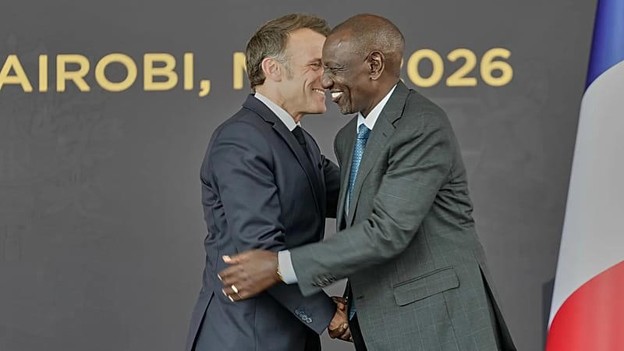
French President Emmanuel Macron is coming to Accra, and Ghana's Foreign Affairs Minister Samuel Okudjeto Ablakwa, recently celebrated for a string of diplomatic wins, is thanking him for it. The Foreign Affairs Ministry has praised Macron's statement as "honest, open, conciliatory and exemplary leadership" following his acceptance of an invitation to address the Next Steps High-Level Conference on Reparatory Justice. This is the same Emmanuel Macron whose government, on March 25, 2026, sat in the abstention column when the United Nations General Assembly voted to declare the transatlantic trafficking and enslavement of Africans the gravest crime against humanity. France could not bring itself to say Yes. And now France wants to come to Accra to talk about reparatory justice.
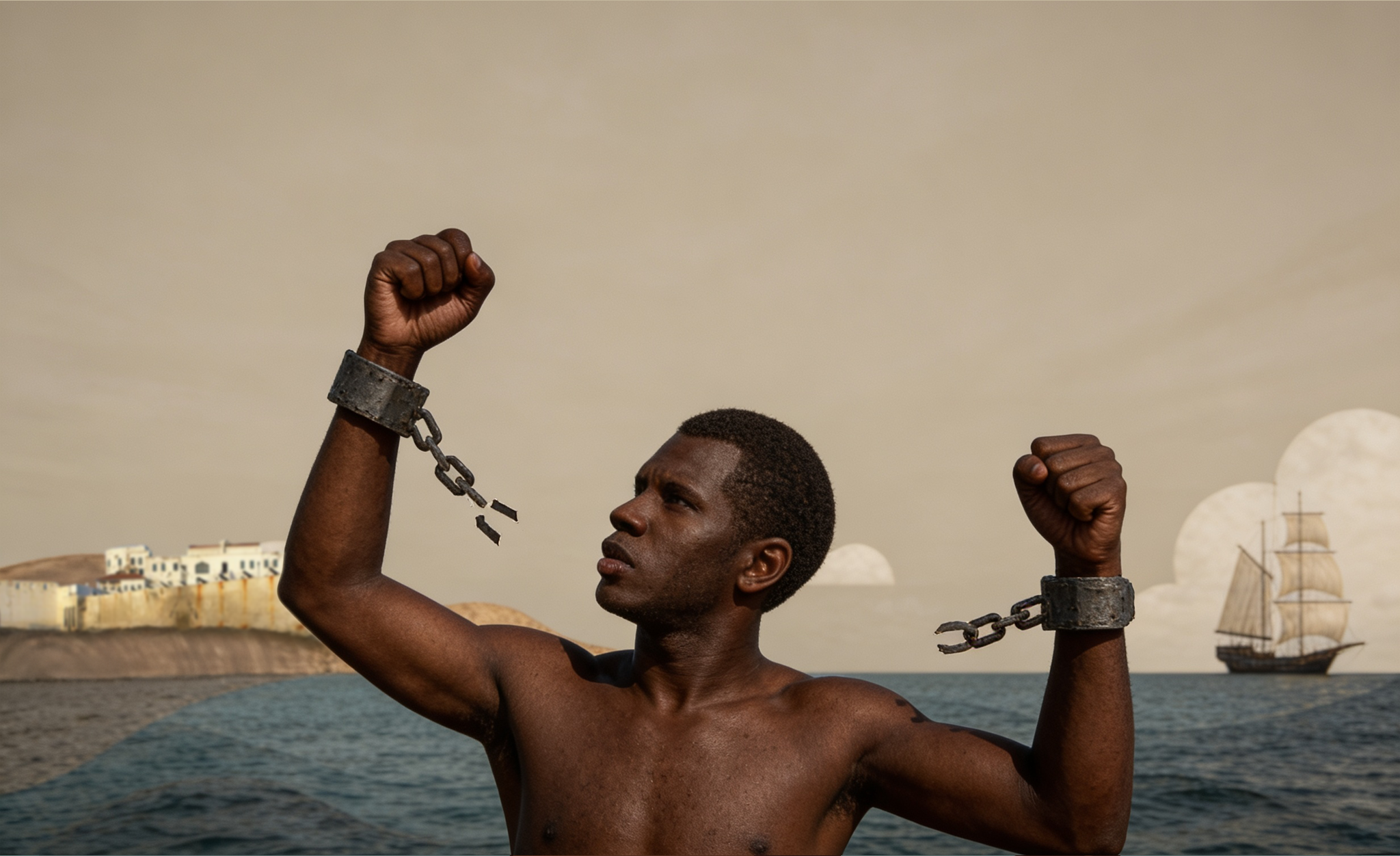
The abstention was not accidental diplomatic ambiguity. France, alongside every other European Union member state, made a deliberate political calculation that affirming the full moral weight of the slave trade would expose it to legal and financial obligations it is unwilling to meet. The stated reason, that the resolution implied a "legally unsupported hierarchy among crimes against humanity," was a bureaucratic formulation designed to dress up a refusal as a procedural concern. What it actually meant was this: France will not call its founding crimes by their full name if doing so might eventually cost French taxpayers money. This is not a government engaged in reckoning. This is a government engaged in liability management. Yet here is Hon. Ablakwa welcoming Macron to a summit whose entire premise is that the crimes France refuses to categorically affirm demand structural redress. The optics are not just unfortunate. They are a warning about how easily the reparations movement can be captured by the very powers it exists to hold accountable.
To understand why Macron is in Accra in June, you must understand what happened in the Sahel over the past three years. France built its post-colonial African policy on a network of military bases, security agreements, and client governments that allowed Paris to maintain economic and strategic dominance over its former colonies long after the imperial flags were lowered. At its height, Operation Barkhane stationed over 5,500 French troops across Mali, Burkina Faso, Niger, Chad and Mauritania, nominally to fight jihadist insurgencies, practically to preserve the architecture of Françafrique. Coup after coup dismantled that architecture. Mali expelled French forces in 2022. Burkina Faso followed in early 2023. Niger completed the rout when the last French troops departed in December 2023, with Paris shutting its embassy in Niamey as a final humiliation. Chad, Senegal and Cote d'Ivoire subsequently announced the end of their own military arrangements with France. The Alliance of Sahel States, formed in September 2023 by Mali, Niger and Burkina Faso as a mutual defense pact explicitly oriented away from Western influence, left ECOWAS entirely in January 2025. In less than three years, France lost the military footprint it had maintained across West and Central Africa for six decades.

This is the context in which Macron arrived at the Africa Forward Summit in Nairobi in May 2026, declared himself a "Pan-Africanist" at a press conference, announced $27 billion in African investment, and at one point stormed a panel to seize a microphone and tell an audience of Africans he was there to "restore order." The Nairobi summit was France's attempted pivot, finding a new English-speaking anchor in Kenya's Ruto after the Francophone West African had rejected it. It was not a new relationship. It was a rebranding exercise for a colonial power that had been expelled from its traditional sphere and was shopping for new entry points, and the reparations summit in Accra is the next stop on that same tour.
France has offered gestures. In a move celebrated in certain circles as a sign of good faith, the French parliament moved to repeal the Code Noir, the colonial-era statutes that legally classified enslaved Africans as movable property. It is worth being precise about what this actually is: the belated removal of a law so morally indefensible that its continued existence was itself an embarrassment, accompanied by an explicit refusal to include any demands for reparations in the repealing legislation. France will strike the Code Noir from the books while ensuring that the repeal imposes no obligation to compensate the descendants of the people the Code governed. The proposed Ghana-France Scientific Commission will produce research, research will produce reports, reports will produce further dialogue, and none of this is reparations. It is the procedural simulation of accountability designed to substitute for the real thing.
The pattern holds across France's history with this continent. Haiti declared independence in 1804 after the only successful slave revolution in history, and France responded by demanding an indemnity, extracting compensation from Haitians for the "lost property" of French slaveholders, a debt Haiti continued paying until 1947 and whose compounding costs have been estimated to have drained over $100 billion from Haitian development. France has never offered restitution for this extortion. Meanwhile the CFA Franc, used by fourteen African countries, continues to require those countries to deposit a substantial portion of their foreign reserves with the French Treasury, a monetary arrangement whose origins lie explicitly in colonial subordination and whose continuation represents an ongoing structural constraint on the economic sovereignty of nations France once owned. Macron will not be addressing either of these at the Accra summit. He will be talking about frameworks and dialogue and the repeal of old laws and the promise of scientific commissions.
None of this means African governments should refuse to engage Western powers on reparations. The reparations cause requires Western governments precisely because their parliaments, financial systems, archives and legal mechanisms are the terrain on which structural change must happen. But engagement is not the same as a platform, and a reparations conference is not a rehabilitation clinic. Macron must not come to Accra. Not because the conversation should be closed to France, but because France has not yet done the minimum required to earn a seat at this particular table. Before any French representative sets foot in that conference hall, Paris must answer, in writing and on the record, its position on the CFA arrangements that continue to hold fourteen African economies in monetary subordination. It must account for the Haitian indemnity, the $100 billion extortion that France extracted from a Black republic for the crime of winning its own freedom, and it must say plainly what it intends to do about it. These are not preconditions invented to exclude France. They are the baseline of seriousness. A government that cannot clear that bar is not a partner in reparatory justice. It is a gate-crasher deploying the language of justice to avoid its consequences.
The reparations movement is a political and legal offensive against the accumulated wealth and structural advantages that colonial extraction produced and that persist to this day. When France, having just abstained from the foundational UN declaration, arrives at a reparations summit to discuss frameworks and shared understanding, the movement is not advancing. It is being managed, absorbed, and slowly defanged by the very power it was built to confront. Africa has seen this cycle too many times: the language of partnership deployed to prevent the redistribution of power; the gesture of acknowledgement offered in lieu of the act of repair. The cause is too important, and the historical moment too rare, to allow it to become a backdrop for French foreign policy rehabilitation. Macron can answer the questions from Paris. The podium in Accra is not his to claim.