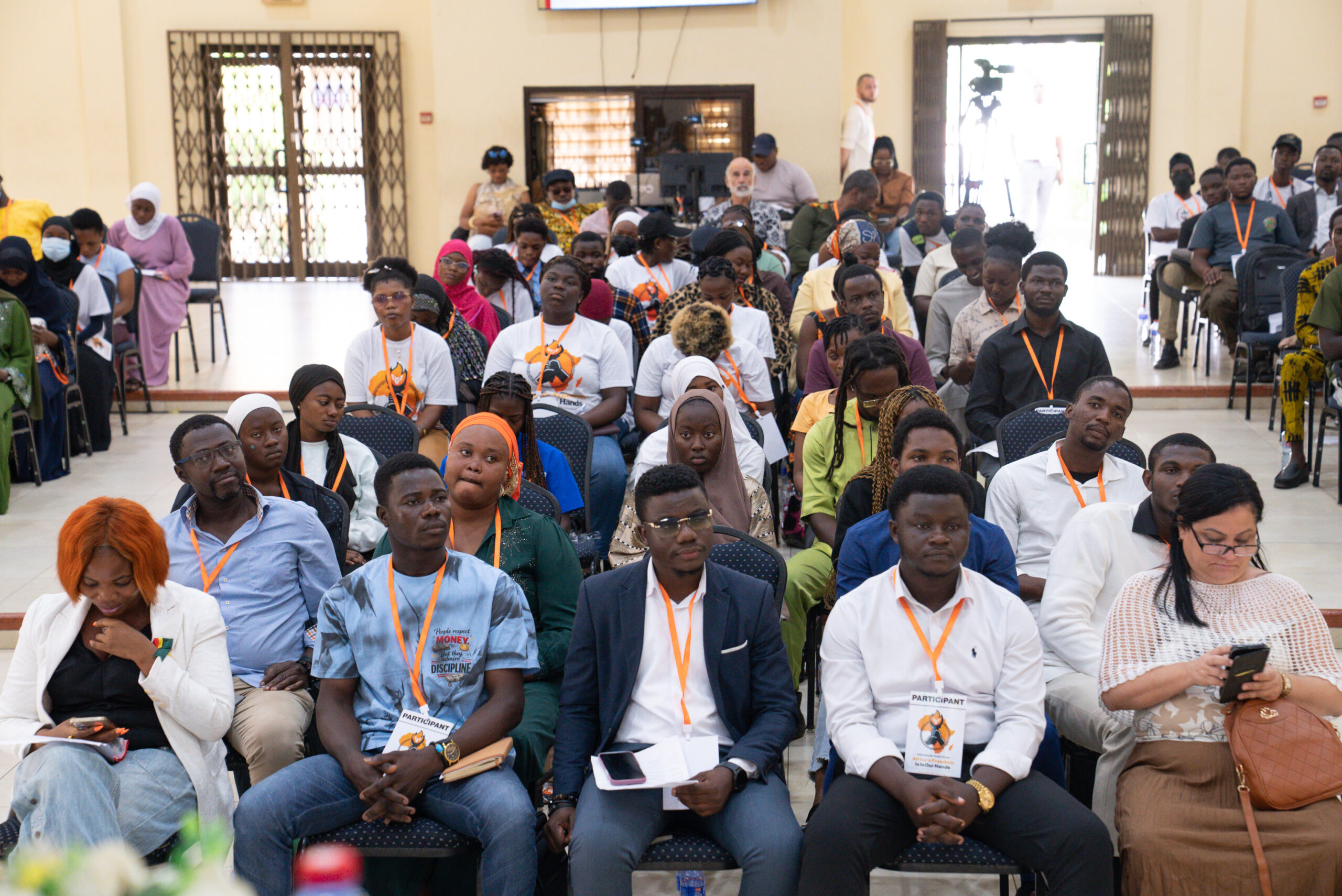
When the Pan-African Progressive Front convened over 250 young people from eleven countries at the ISSER Conference Hall on 5 September, it was easy to read the day through the lens of protest, a gathering of youth demanding what governments have not yet delivered. That reading misses the more important story. The Youth Forum on Debt and Reparations was not staged in opposition to the institutional reparations agenda now taking shape across Ghana, the African Union and the United Nations. It was staged to reinforce it, and that distinction matters enormously for what comes next.
A Moment of Genuine Convergence
Consider the timeline. In March 2026, the United Nations General Assembly adopted a resolution recognising the transatlantic slave trade as among the gravest crimes against humanity in recorded history, a resolution Ghana's own government helped drive to the floor. In June, Ghana hosted a High-Level Next Steps Conference on Reparatory Justice, producing three concrete mechanisms: a global advisory structure, a legal panel, and a panel on the restitution of cultural heritage. By September, when PPF's Youth Forum opened, the Ministry of Foreign Affairs judged the event significant enough to send Ambassador Francis Danti Kotia, its Coordinating Director for Multilateral and International Organisations, to brief delegates directly on that same institutional progress.
This is not a coincidence, and it is not two separate movements running in parallel. It is one agenda, being carried simultaneously by heads of state in UN chambers and by students in a university conference hall, each doing the part the other cannot.
What Institutions Cannot Do Alone
Governments negotiate treaties, sponsor resolutions, and build the legal architecture through which reparations claims can eventually be enforced. That work is essential, and Ghana under President Mahama has done more of it in the past year than perhaps any African government in a generation, from the Accra Declaration's Pan-African Reparatory Justice Coordinating Committee to the League of African Free Movement to the UN resolution itself.
But treaties do not sustain themselves. Institutional agendas move at the pace of diplomacy, which is to say, slowly, and they are vulnerable to the ordinary hazards of politics: a change of government, a shift in international attention, a competing crisis that crowds reparations off the agenda. What sustains an institutional agenda across those hazards is a live constituency that keeps demanding it, one that does not depend on any single administration remaining in office to keep the pressure on.
That is the function a youth movement serves, and it is a function no ministry can perform on its own. When Kwesi Pratt Jnr told delegates that reparations "is not simply compensation for past crimes; it is about restructuring the world," he was not undercutting the diplomatic process. He was building the popular mandate that gives diplomats something to point to when they sit across the table from former colonial powers and multilateral lenders. A negotiator backed by an organised, informed, multi-generational public is a stronger negotiator than one operating alone.
Why the Momentum Cannot Be Allowed to Lapse
The greatest risk facing any reparations agenda is not opposition. It is exhaustion. Global attention has a short half-life, and the history of international justice movements is littered with resolutions that were adopted with great ceremony and then quietly shelved once the cameras left. A UN resolution passed in March, however historic, is not self-executing. It requires a constituency that remembers it was passed, that tracks whether the mechanisms it promised are actually being built, and that keeps returning to the subject long after the initial news cycle has moved on.
This is precisely why PPF designed the Forum's closing sessions around action rather than applause: a mechanism for reparations flashmobs and micro-legal claims, a mandate to draft a Youth Chapter of the Accra Declaration, and a commitment to organise across campuses, communities and digital platforms. These are not symbolic gestures. They are the infrastructure of sustained attention, the thing that ensures the June conference's three mechanisms do not quietly stall for want of anyone asking where they stand.
A Model Worth Repeating
What Ghana has demonstrated over the past year, and what this Forum extended into its youngest generation, is a model other African states would do well to study: government leadership on the diplomatic and legal front, matched by organised civil society sustaining public pressure and political education on the ground. Neither half of that model works as well without the other. A government agenda without a mobilised public risks losing momentum the moment attention shifts elsewhere. A youth movement without institutional partners risks producing energy with nowhere to go.
The task now is to keep both halves moving together. That means African governments continuing to treat civil society and youth movements as partners in this agenda rather than noise to be managed, and it means movements like PPF continuing to do the patient, unglamorous work, of organising, educating, and returning to this cause year after year, that keeps an institutional agenda honest and alive.
The Youth Forum on Debt and Reparations was one day. The debt it addressed took centuries to accumulate, and the justice it demands will not be delivered in a single conference or a single UN session. What was won in Accra was not a conclusion but a commitment: to keep showing up, in solidarity with the institutions doing the diplomatic work, until the mechanisms already on paper become material fact.
— Pan-African Progressive Front