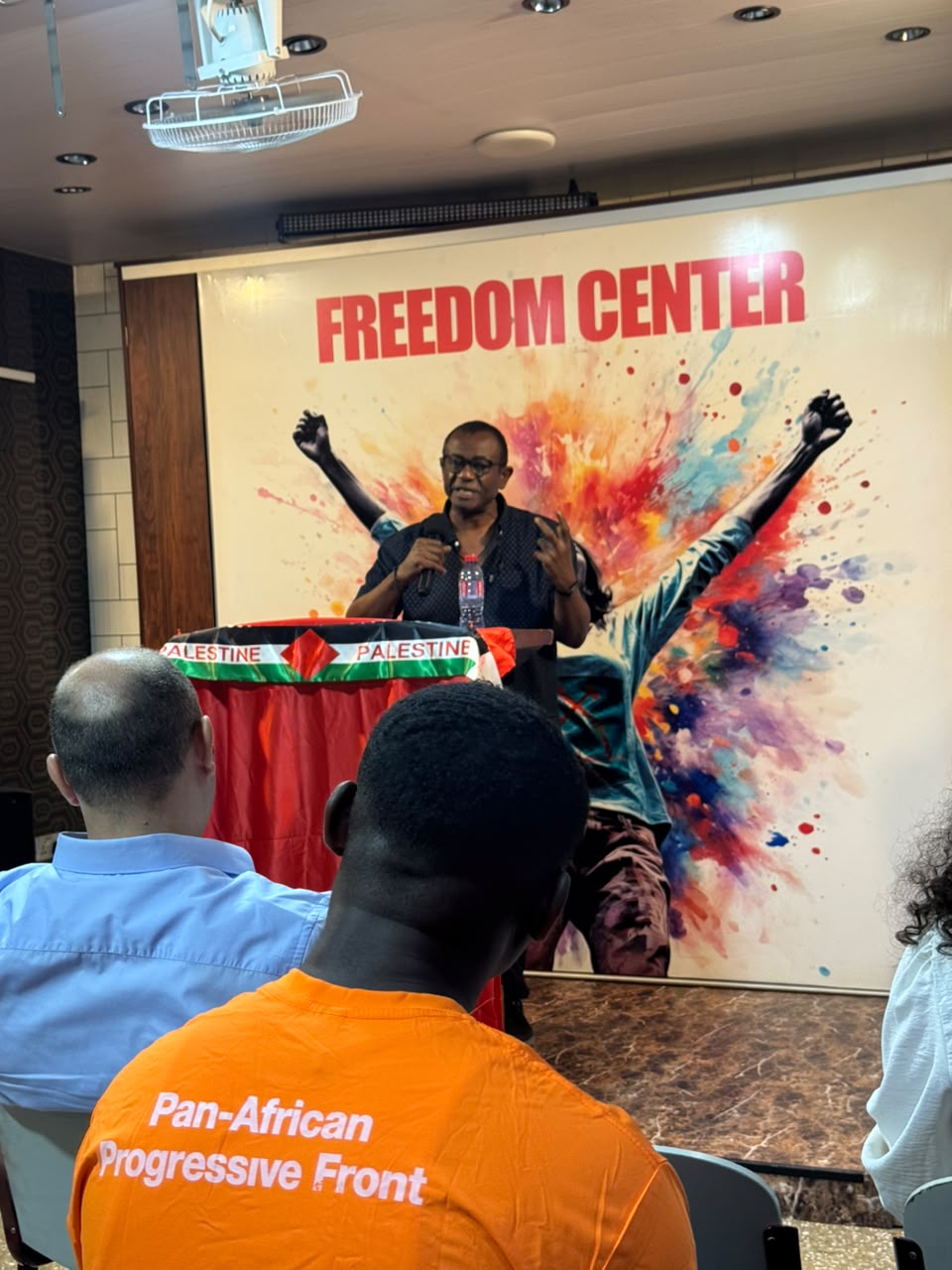
The forum brought together organisations committed to Palestinian solidarity at a time when the struggle over Palestine extends beyond the battlefield into universities, cultural institutions, the media and international political spaces. Participants stressed that the fight against genocide requires confronting not only the violence inflicted on Palestinians but also the political and institutional efforts that seek to normalise Israel's actions and weaken international solidarity.
The central objective of the gathering was to unite progressive forces in Ghana around a coordinated campaign against these developments, moving from public condemnation towards sustained political education, organised resistance and collective action.
Building a United Front Against Zionist Expansion
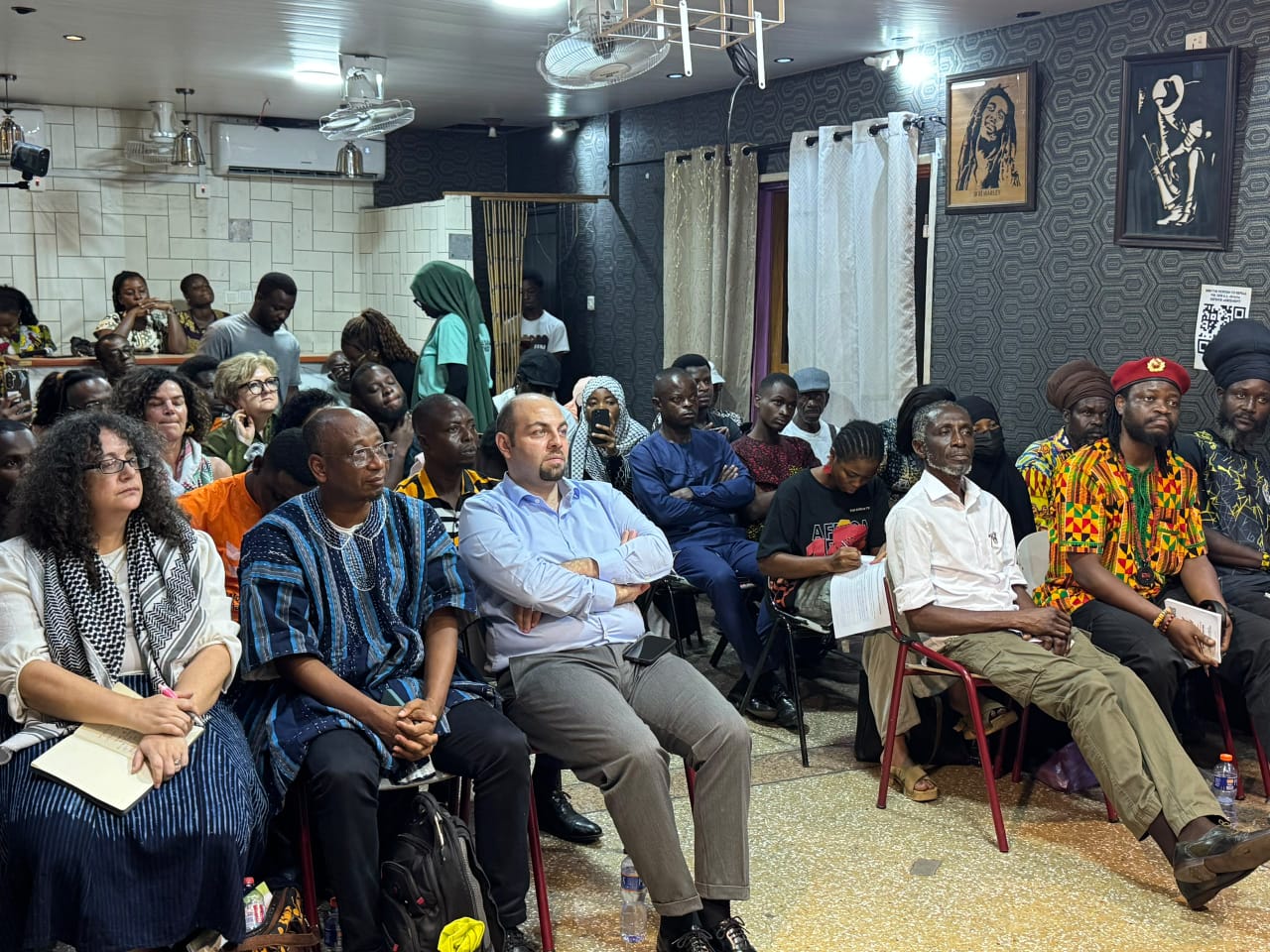
The forum brought together the Boycott, Divestment and Sanctions (BDS) Ghana Campaign, the Socialist Movement of Ghana (SMG), the All-Africa People's Revolutionary Party (AAPRP), the Palestine Solidarity Committee (PSC) Ghana, Freedom and Justice for Palestine, the Legon Palestine Activists Network and the Ghana Anti-Genocide Coalition.
The Pan-African Progressive Front (PPF) also participated as part of the broad coalition, reaffirming its solidarity with the Palestinian people and joining the campaign to resist Zionist expansion in Ghana.
The gathering recognised the need to bring together political organisations, student movements, trade unions, academics, cultural workers and other progressive forces around a common programme of action. The intention is to establish a sustained political front capable of challenging the normalisation of Israeli state policies and opposing efforts to cultivate support for Zionism within Ghanaian institutions.
For the participating organisations, solidarity with Palestine cannot remain confined to expressions of sympathy. It must involve organised resistance to the political, economic, cultural and institutional relationships through which Israel seeks international legitimacy while Palestinians continue to endure occupation, dispossession and mass violence. The forum therefore marked an effort to consolidate existing solidarity initiatives into a broader and more coordinated campaign.
Universities on the Frontline of the Political Struggle
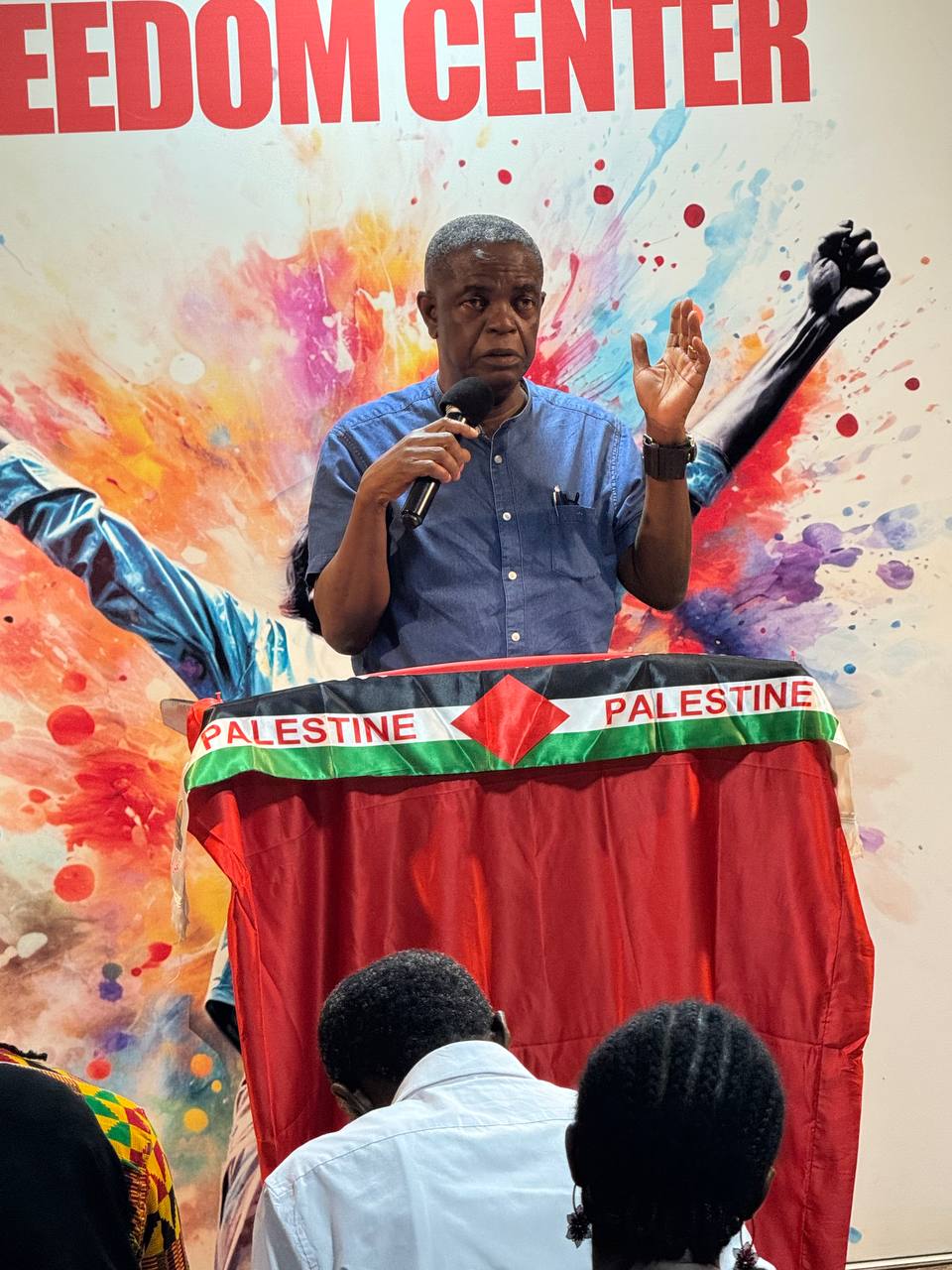
A major focus of the discussions was the growing role of universities and academic partnerships in shaping public understanding of Israel and Palestine. Participants raised concerns about efforts to expand Israeli institutional influence within Ghanaian higher education through academic cooperation, cultural initiatives, research partnerships and programmes presented in the language of international exchange. The forum challenged the assumption that such partnerships are politically neutral, arguing that universities are also sites of ideological struggle where competing political interests seek legitimacy and influence.
Particular attention was directed towards the University of Ghana, where concerns were raised about engagements involving the Department of Political Science and the University of Haifa. Participants discussed proposed academic collaboration and research activities and called for opposition to initiatives that could help normalise institutional relationships with Israel amid the genocide in Gaza.
The concern is that academic partnerships can be used to cultivate relationships with influential scholars, shape research agendas and introduce political narratives favourable to the Israeli state under the broader banner of educational cooperation. Such efforts risk presenting Israel as an ordinary academic partner while marginalising the realities of Palestinian occupation and the international campaign for accountability.
The forum called for resistance to attempts to draw Ghanaian academics and institutions into relationships that could strengthen Israel's political standing. It emphasised that universities must not become instruments for rehabilitating Israel's international image or insulating its policies from critical scrutiny.
This question is particularly important at the University of Ghana, one of the country's leading centres of higher education. The university's academic authority and influence over public debate make its institutional relationships a matter of wider public interest.
The campaign calls on academics, students and university authorities to examine these partnerships critically and oppose initiatives that advance normalisation with Israel while the Palestinian people continue to fight for freedom and self-determination.
Culture, Film and Media as Instruments of Political Influence
The forum also examined the role of cultural programming, film, media and other public-facing initiatives in expanding Israeli influence. Participants raised concerns about the use of seemingly benign cultural activities to promote a favourable image of Israel and cultivate public acceptance of its policies. Film screenings, artistic exchanges and cultural partnerships do not exist outside politics. They can shape public perception, determine which experiences receive visibility and influence how audiences understand an ongoing conflict.
In this context, the campaign argues that Israeli cultural initiatives in Ghana must be examined as part of the wider political struggle over public opinion and international legitimacy.
The concern is not simply the presence of Israeli culture in Ghana. It is the use of cultural engagement to advance normalisation while the Palestinian population continues to suffer the consequences of occupation and military violence. When cultural programming separates Israel's public image from the conditions experienced by Palestinians, it risks obscuring the political realities at the centre of the struggle.
Participants therefore called for a more organised response from solidarity movements, particularly within universities and among young people. This includes challenging programmes that promote normalisation, organising alternative public discussions and screenings, and ensuring that Palestinian voices and the history of their struggle remain central to public engagement.
The forum's message was that the campaign for Palestine must confront the ideological dimensions of the conflict alongside its political and material dimensions.
Strengthening Boycott, Public Education and African Solidarity
The meeting discussed practical steps towards building a sustained national campaign. The BDS campaign was identified as an important avenue for collective action against companies and institutions linked to Israeli policies and practices. Participants called for stronger public engagement with boycott and divestment initiatives, alongside closer scrutiny of institutional partnerships.
Public education was another central priority. The coalition intends to strengthen its outreach through public forums, documentary screenings and discussions that address the history of Palestine, the occupation, the genocide in Gaza and the international struggle for Palestinian rights.
The organisers also emphasised the importance of engaging student organisations, trade unions, community groups and progressive political movements. Such engagement is necessary to expand the campaign beyond existing solidarity networks and establish a wider social base for sustained action.
At the continental level, participants called for African governments to use their diplomatic influence to demand an end to the violence against Palestinians and accountability for violations of international law.
These demands reflect a broader Pan-African commitment to opposing colonial domination, racial oppression and imperialist intervention. The Palestinian struggle was situated within the wider history of peoples fighting for national liberation and the right to determine their own political future.
The Pan-African Progressive Front Stands with Palestine
The Pan-African Progressive Front's participation reaffirmed its commitment to the Palestinian struggle and its opposition to the expansion of Zionist influence in Ghana.
PPF stands with the Palestinian people in their struggle for liberation, self-determination and an end to occupation. Its participation in the forum forms part of its wider commitment to international solidarity against imperialism and racial oppression.
The organisation recognises that the struggle for Palestine requires political coordination across borders and resistance to the institutional relationships that seek to normalise Israeli policies. It therefore joins other progressive forces in Ghana in building a broad coalition capable of challenging these developments through public education, mobilisation and organised political action.
The forum provided an opportunity to strengthen cooperation among solidarity organisations and establish a common basis for continued campaigning. The next task is to translate this unity into sustained activity within universities, communities and other spaces where public opinion and political consciousness are shaped.
From Solidarity to Organised Resistance
The Accra forum concluded with a renewed commitment to strengthen the campaign against genocide, racism and war and to build a broad movement in solidarity with Palestine.
The gathering underscored the need to confront Zionist expansion in Ghana not as an isolated question but as part of the wider struggle over political influence, institutional cooperation and public opinion. The campaign will continue to challenge efforts to normalise Israeli state policies through academic partnerships, cultural initiatives and other forms of institutional engagement.
The participating organisations intend to deepen public education, expand boycott and divestment initiatives and strengthen cooperation among progressive forces across Ghana.
For the Pan-African Progressive Front and its allies, the message is clear: solidarity with Palestine demands more than words. It requires organised resistance to the political and institutional processes that sustain normalisation while Palestinians continue their struggle for freedom.