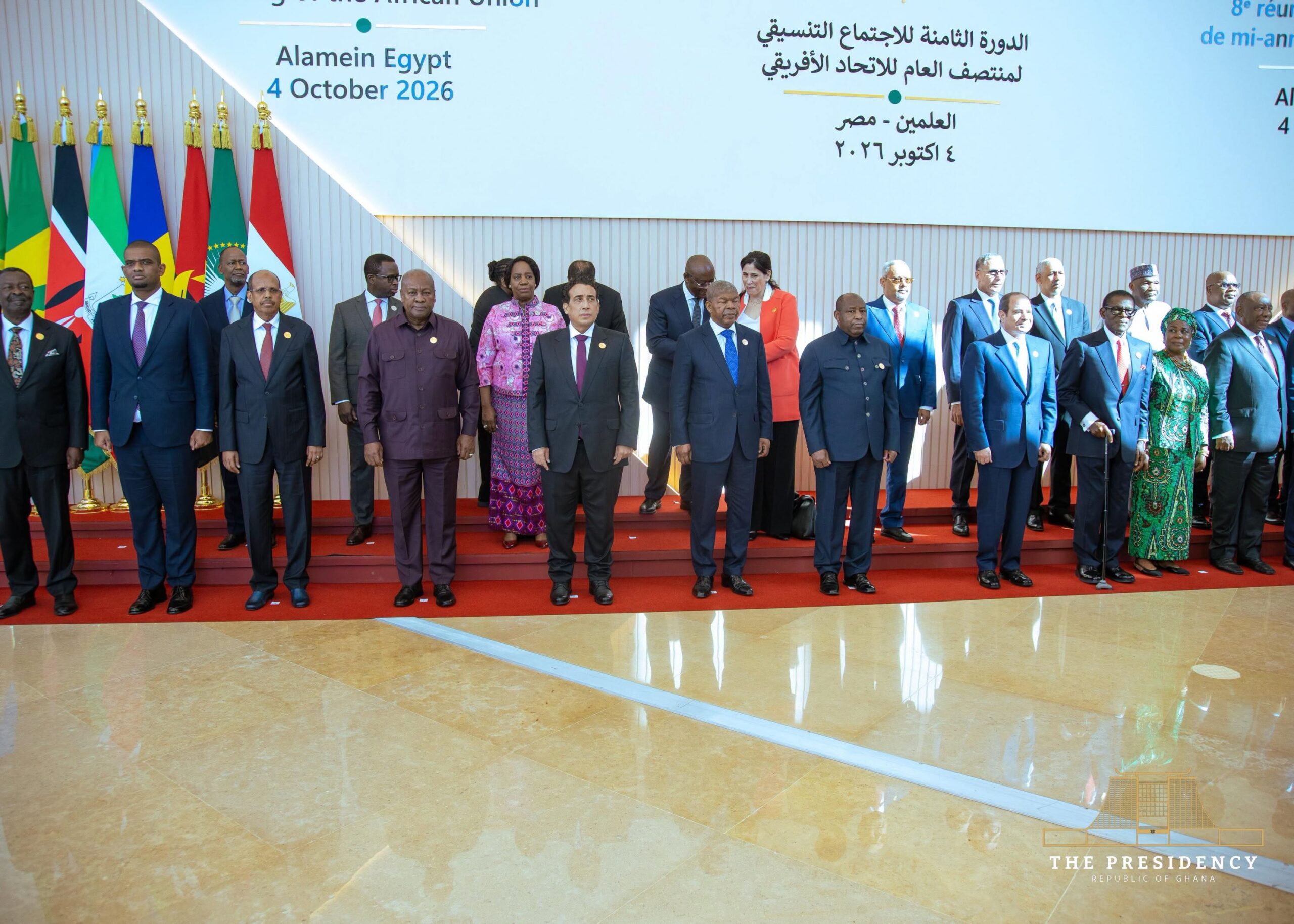
African leaders and economic institutions are calling for a major shift in how the continent finances its development, arguing that Africa must mobilise more of its own capital, expand intra-African trade and build stronger continental financial institutions rather than remaining heavily dependent on external financing.
The call emerged from the inaugural Alamein Africa Forum, held in Egypt from October 2 to 4, where more than 20 African heads of state and government representatives joined business leaders, bankers and development institutions to discuss trade, investment and Africa’s economic future.
The discussion comes amid a persistent contradiction in the African economy: the continent possesses substantial natural resources, a large consumer market and significant financial resources, yet much of its economic activity remains oriented towards markets and institutions outside Africa.
Egyptian President Abdel Fattah el-Sisi said around 85 percent of African private-sector transactions are conducted with companies outside the continent, highlighting the limited economic integration between African economies. African Union Commission Chairperson Mahmoud Ali Youssouf said intra-African trade reached $220 billion in 2024, representing only 14.4 percent of Africa's total trade. Although intra-African trade increased by 12.4 percent that year, he argued that the continent still has substantial room to expand economic exchange among African countries.
Mobilising Africa’s Own Capital
One of the strongest proposals emerging from the forum came from Central Bank of Egypt Governor Hassan Abdalla, who said Africa could potentially direct 10 percent of its banking liquidity and 5 percent of its international reserves towards investment within the continent. The proposal points to an important question for African development: how much of the capital already held within African financial systems can be redirected towards African production, infrastructure and industrialisation rather than relying primarily on external sources of finance?
Afreximbank President George Elombi also called on African governments to strengthen and protect African-owned financial institutions so they can play a greater role in supporting the continent during economic crises. Afreximbank's balance sheet has expanded approximately sixfold over the past decade, with shareholders' funds approaching $9 billion.
The issue is therefore not simply about attracting more foreign investment. It is increasingly about developing the financial capacity to finance African priorities with African resources.
From Raw Materials to African Production
The African Union has also placed greater emphasis on transforming the continent's resources into productive capacity. The AU said the continent continues to import products that it has the resources to produce itself, including food, medicines and manufactured goods. At the Alamein Forum, African leaders called for greater value addition, industrial production and stronger regional value chains.
This has direct implications for the structure of African economies. For decades, many African economies have remained heavily dependent on exporting raw materials while importing finished products. The result is that much of the economic value generated from African resources is realised outside the continent. The Alamein discussions therefore placed industrialisation, intra-African trade and continental investment at the centre of the development agenda.
AfCFTA and the Question of Economic Sovereignty
The African Continental Free Trade Area was repeatedly identified as a central instrument for changing this situation. The AU argues that AfCFTA can provide the continental market needed to support larger-scale African production. But achieving this requires more than removing tariffs. It requires functioning trade corridors, cross-border payment systems, improved infrastructure, harmonised standards and stronger African value chains.
African leaders also called for faster implementation of continental integration measures and the removal of barriers that continue to make it easier for African businesses to trade with external markets than with neighbouring African countries.
The logic is straightforward: a fragmented African market limits the ability of African companies to develop at continental scale. A more integrated market could create the demand necessary to support African manufacturing and investment.
A New African Investment Platform
The founding members of the New Partnership for Africa's Development, Algeria, Egypt, Nigeria, Senegal and South Africa, adopted the Alamein Declaration during their meeting on October 3. Among other measures, the declaration calls for an African investment platform and stronger financing for AUDA-NEPAD. The founding NEPAD states agreed to pursue the investment platform by February 2027.
The initiative reflects a broader push towards creating mechanisms through which African capital can finance African development priorities. The African Union has similarly stressed the need to move from political commitments towards concrete, financed projects under Agenda 2063.
Beyond Dependence
The debate at Alamein raises a broader question about Africa's place in the global economy. Africa does not lack resources. The continent possesses enormous mineral wealth, agricultural potential, energy resources and a large and growing population. Yet these advantages have not translated into corresponding levels of industrial and financial independence.
The challenge identified by African leaders is therefore not simply to attract more external capital. It is to increase the capacity of African states, businesses and financial institutions to mobilise existing resources and direct them towards African priorities.
This includes strengthening African financial institutions, increasing intra-African trade, developing continental value chains and using African savings and reserves to support productive investment.
For the Pan-African project, the question is ultimately one of economic sovereignty: who controls Africa's capital, who finances its development and who captures the value generated from its resources?
The Alamein Forum has placed those questions firmly on the continental agenda. The next challenge will be turning these commitments into institutions, investment and production capable of reducing Africa's dependence on external financing and markets.
Africa has the resources. The question is whether Africa can build the financial and productive power to control them.