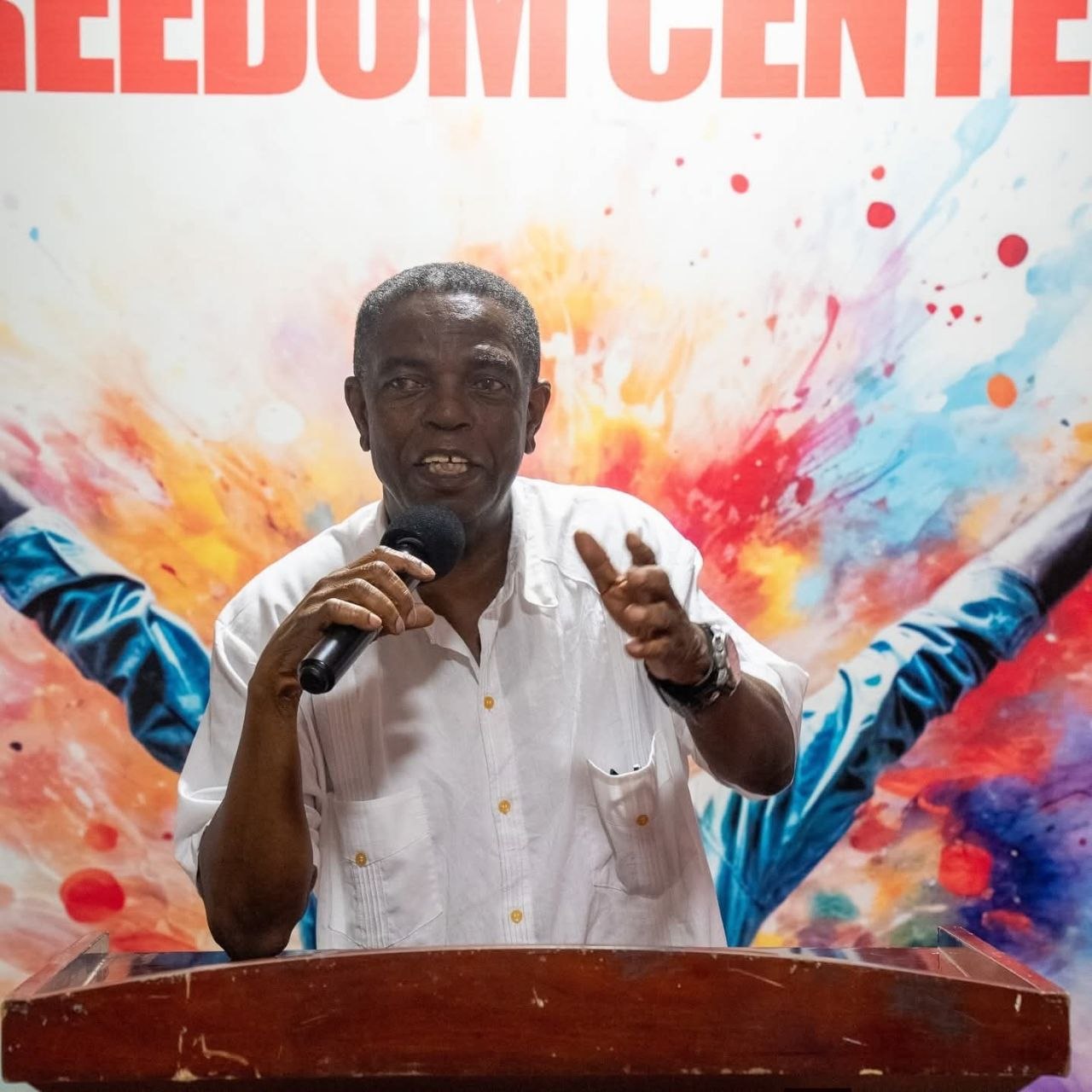
The Ghana Journalists' Association (GJA) marked its 77th anniversary on Wednesday with a keynote address from Kwesi Pratt Jnr, Director of Pan African Television, a member of the coordinating committee of the Pan-African Progressive Front (PPF) and a veteran journalist, who called on the profession to confront growing pressures from media ownership concentration, commercial interests and artificial intelligence.
Pratt traced the GJA's roots to August 15, 1949, when it began as the Africa Press Association, an indigenous alternative to the colonial press. He noted that nationalist leaders of that era, including Kwame Nkrumah, understood journalism as a tool for shaping political consciousness, not simply reporting events after the fact. He situated that founding moment within the broader anti-colonial struggle, describing a press born in resistance to imperial control rather than in service to it.
"The press was therefore never merely an observer of Ghana's history," Pratt said. "It was part of that history."
Pratt located the GJA's history within a longer arc of struggle, noting that Ghanaian journalism has survived colonialism, imperialist interventions and draconian laws, and now faces a new set of pressures from platform capitalism and concentrated media ownership. Citing UNESCO's assessment of Ghana's media environment, he acknowledged progress in press freedom since the 1992 Constitution but flagged persistent risks: rising insecurity among journalists, increasing media concentration and commercial pressure on editorial independence. He referenced research showing perceptions of government influence over editorial decisions tied to the political affiliations of media owners.
"Freedom from government censorship is not the same as freedom from pressure," he said, calling for a broader conversation on media economics and journalist safety, and arguing that ownership structures, not just state power, shape what gets reported.
On artificial intelligence, Pratt argued the central question is not whether AI will replace journalists but what remains distinctly valuable about journalism once machines can generate information faster and more cheaply. He said AI can assist with transcription, translation and data analysis, but cannot take moral responsibility for what gets published or investigate a story in the public interest.
"Technology must remain a tool," he said. "It must never become the ultimate editor."
Pratt also urged Ghanaian journalism to widen its focus beyond state officials, corporate executives and institutional authorities to include farmers, market women, fishermen, teachers, nurses and other working people whose experiences rarely make national news outside of disaster coverage. He framed this as a question of narrative power, arguing that Ghana's story must be told from Ghana's own realities rather than reproduced from accounts authored elsewhere.
He outlined four priorities for the GJA going forward: strengthening legal and safety support for journalists, rebuilding public trust through higher professional standards, preparing journalists for technological change, and reconnecting journalism with ordinary citizens.
"After 77 years, the question before the Ghana Journalists Association is not simply how to preserve the institution," Pratt said. "It is how to renew its purpose."