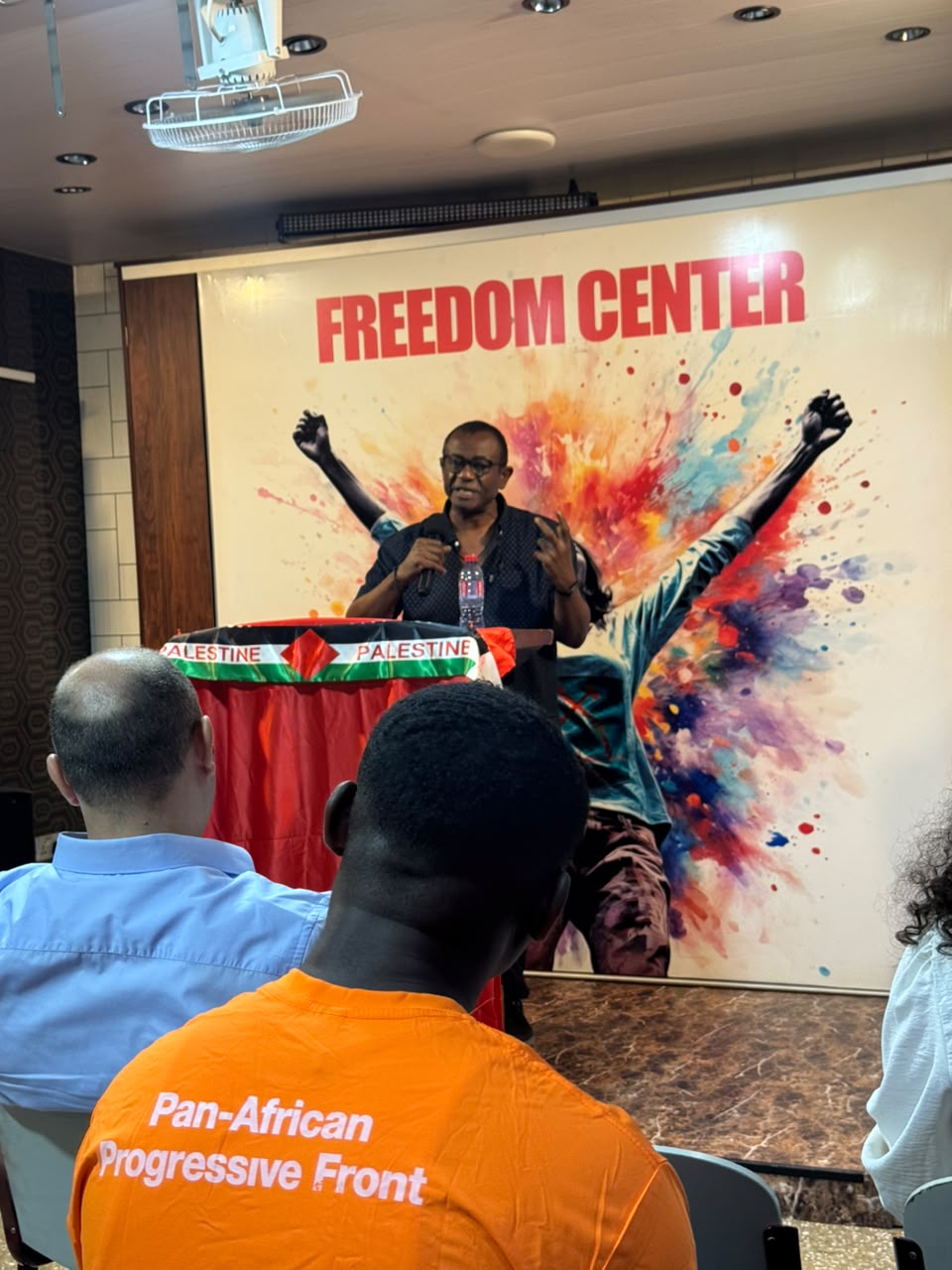
The Pan-African Progressive Front (PPF) has issued a statement reaffirming its solidarity with the Palestinian people and calling for concrete action against Israeli occupation, emphasising that international recognition of Palestinian statehood must be matched by practical measures to advance Palestinian freedom, sovereignty and self-determination.
Released on 23 October 2026, the statement addresses the ongoing Palestinian struggle, the humanitarian situation in Gaza, international diplomatic responsibility, and growing concerns over institutional relations between Ghanaian and Israeli universities. It also highlights recent solidarity initiatives in Ghana and calls for stronger cooperation among progressive movements, workers’ organisations, trade unions, students and youth in advancing the Palestinian cause.
Strengthening Solidarity with Palestine
The statement follows a courtesy visit by H.E. Ahmed Abu Dalfa, Head of Mission of the State of Palestine to Ghana, to the PPF Secretariat in Accra on 16 September 2026. Discussions with the PPF Coordinating Committee focused on strengthening cooperation and expanding public education and mobilisation around the Palestinian struggle.
A central message from the engagement was the importance of understanding the Palestinian question as a struggle for justice, liberation and self-determination rather than a religious conflict. The statement emphasises that diplomatic recognition of Palestine, while significant, cannot substitute for concrete measures to challenge the occupation, uphold international law and advance Palestinian sovereignty.
Concerns Over Institutional Relations with Israeli Universities
A major issue addressed in the statement is the growing concern over proposed institutional collaborations between Ghanaian universities and Israeli academic institutions. The PPF endorses calls by the Socialist Movement of Ghana (SMG), the Boycott, Divestment and Sanctions (BDS) Ghana Campaign and other organisations opposing the establishment or normalisation of such relationships. Particular attention is given to a proposed collaboration between the University of Haifa and the Department of Political Science at the University of Ghana to establish a Middle East Studies programme.
The statement calls for full disclosure of existing or proposed agreements and encourages students, academics, workers and activists to build a broader campaign against institutional normalisation in Ghanaian universities and public institutions.
Gaza and International Responsibility
The statement also reflects on the humanitarian situation in Gaza, recalling the total siege announced by Israeli authorities on 9 October 2023 and the suffering caused by displacement, destruction and restricted access to essential supplies.
It highlights the importance of sustained international engagement and accountability, stressing that the Palestinian struggle must not be reduced to humanitarian concerns alone. The statement further addresses diplomatic obstacles facing Palestinian representatives, including the denial of a United States visa to Palestinian President Mahmoud Abbas ahead of the United Nations General Assembly in September 2025.
It references UN General Assembly Resolution 80/81, adopted in December 2025, as part of the broader international legal framework concerning Israeli settlements in occupied Palestinian territory.
Building a Sustained Solidarity Movement
The statement recognises recent public education and solidarity activities in Ghana, including an interview with Palestinian Foreign Minister Dr Varsen Aghabekian Shahin on Pan African Television, a documentary screening on Gaza organised by the Accra Collective of SMG, and a public forum on Palestine held at the Freedom Centre in Accra on 23 October.
These engagements form part of broader efforts to deepen public understanding of the Palestinian struggle and strengthen solidarity across different sections of Ghanaian society. The statement calls for continued political education, grassroots mobilisation and international cooperation, particularly among students, workers, trade unions, progressive organisations and community groups.
It also draws attention to the historical connections between Africa’s anti-colonial liberation struggles and the Palestinian people’s pursuit of freedom and self-determination.
From Recognition to Concrete Action
The statement concludes by urging governments and international institutions to translate commitments to Palestinian rights into meaningful action. Among the key demands are concrete measures against Israeli settlement activities, accountability under international law, transparency over institutional agreements involving Israeli institutions in Ghana, and sustained efforts towards Palestinian self-determination.
“The Palestinian people remain steadfast in their struggle for freedom. Solidarity must go beyond words and recognition to become sustained action in support of their rights and aspirations,” the statement concludes.