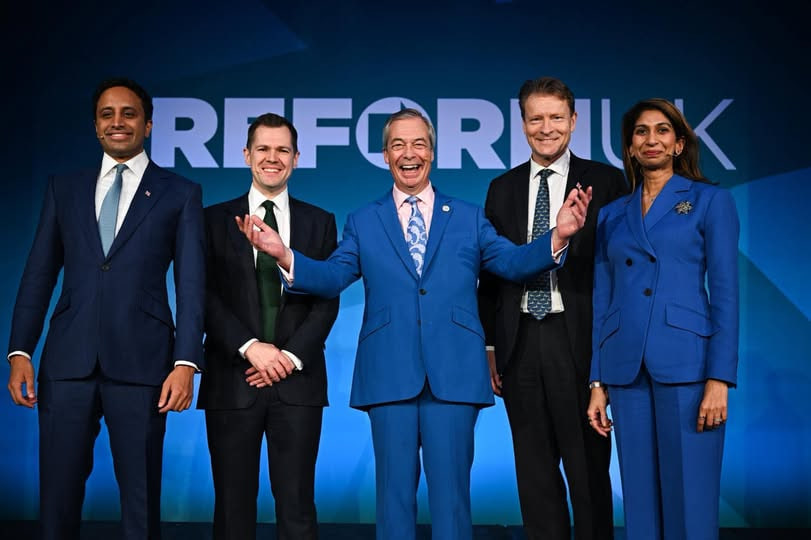
When Nigel Farage's Reform UK announced it would impose a blanket visa ban on nationals from any country formally demanding slavery reparations, the party was not making a foreign policy argument. It was issuing a threat. The targets were Ghana, Jamaica, Nigeria, Barbados and the broader African and Caribbean world that has spent decades constructing an unanswerable moral and legal case for reparatory justice.
Reform's home affairs spokesman Zia Yusuf dressed this extortion up as principle, trotting out the claim that Britain was the first major power to abolish the slave trade and deserves credit for it. This is a recycled imperial talking point that collapses on contact with actual history. Britain did not abolish slavery out of moral conscience. It abolished it following sustained Black resistance, including Haitian independence and near-constant revolts across the Caribbean, alongside abolitionist pressure that the enslaved themselves shaped and fuelled. The British state then compensated slave owners to the tune of £20 million while the enslaved received nothing. British taxpayers were still repaying that debt to former slaveholders until 2015
The timing of Reform's announcement is not accidental. In March 2026, the UN General Assembly passed a resolution led by Ghana and backed by the African Union and CARICOM, declaring the transatlantic slave trade the gravest crime against humanity and calling for reparatory justice. It passed with 123 votes in favour. Britain abstained. Reform UK responded within weeks with a visa ban covering the very nations that championed that resolution. That sequence tells you everything about what this policy actually is: a punitive effort to penalise the Global South for winning a vote.
The political context makes it worse. Reform holds only eight seats in Parliament yet sits ahead of the 2029 election. A party with minimal parliamentary representation is setting the terms of national debate by weaponising anti-Black hostility. The CARICOM Reparations Commission called the proposal exactly what it is: a continuation of toxic racism. This is not a serious policy but a populist recruitment campaign for the British far right, using the histories and bodies of African and Caribbean peoples as electoral ammunition.
The Brattle Report, commissioned for the University of the West Indies, calculated that Britain owes over £18 trillion in reparations, more than five times the country's annual GDP. Reform UK's answer to that figure is to threaten visa bans on the doctors, nurses, students and families those countries send to Britain to salvage its deteriorating health system. It is colonial logic updated for the social media age: you have nothing to claim from us, and if you keep asking, we will make your people pay for your government's courage.
The Labour government's response has been characteristically feeble. Keir Starmer has said he prefers to look forward rather than engage with reparations, as though this is a conversation Britain is entitled to walk away from. Labour dismissed the Reform proposal as a gimmick. Not historically illiterate. Not morally repugnant. A gimmick. That is the ceiling of British liberal opposition to resurgent far-right revanchism, and it should embarrass every person who voted for it expecting something different.
Reform's so-called Reparations Lock sits inside a broader Western pattern that cannot be ignored. The United States, one of only three countries to vote against the UN resolution alongside Israel and Argentina, has long imposed immigration restrictions covering many of the same African and Caribbean nations Reform UK targets. Washington and Farage are working from the same imperial playbook, using migration controls as instruments of punishment against nations asserting their historical rights.
The resurgence of the British far right is not a spontaneous cultural reaction. It is a deliberate political project, sustained by historical amnesia manufactured from the top down, and by media institutions that have spent years presenting Farage and his cohort as the common-sense alternative to Britain's problems rather than naming them for what they are: a danger to every community this country was built on the backs of. The liberal centre, meanwhile, has not simply failed to stop this growth. It has fertilised it, through cowardice, triangulation and a consistent refusal to tell British voters the truth about their own history.
Every progressive organisation and movement that understands what is at stake stands in full and unconditional solidarity with African and Caribbean governments confronting this aggression. We are ready to back them politically, organisationally and in every public arena available to us. What Reform UK and formations like it represent is not a policy divergence or a difference of cultural opinion. It is fascism wearing a suit and standing at a podium. Africa and the Caribbean are owed a reckoning, and the rest of us know exactly what we owe this moment.
By; Sumaila Mohammed