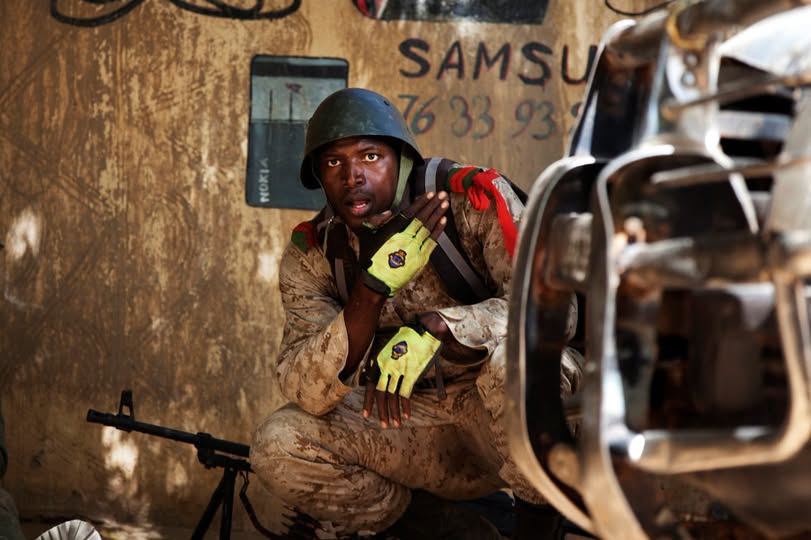
Just over two months after gunmen struck Bamako, Kati and Kidal in the deadliest coordinated assault Mali has known in over a decade, the country has been hit again. On 4 July 2026, fighters from the Azawad Liberation Front and the al-Qaeda-linked Jama'at Nusrat al-Islam wal-Muslimin launched fresh, near simultaneous attacks on army positions in Gao, Anefis and Aguelhok in the north, Sevare in the centre, and a prison in Kenieroba, just south of the capital. Malian and allied forces met the assault directly, and after days of fierce fighting made the decision to reposition out of Anefis in the face of a numerically reinforced and heavily armed enemy. A Malian Air Force helicopter was brought down by weaponry far beyond what a local insurgency should possess. Hospital sources in Kati counted twenty three dead. The country's water and power systems buckled under the strain the attacks placed on national infrastructure.
It is tempting, reading the wire reports, to treat this as simply the latest chapter in a security crisis that has dragged on in Mali since 2012. That framing, however, understates what is actually taking place. What we are watching is not the erratic violence of scattered insurgents but a sustained, well-timed campaign against a government that has done the one thing its adversaries cannot forgive: it has chosen its own partners, and it has chosen to stand at the centre of a Sahelian project, the Alliance of Sahel States, built on the premise that Mali, Burkina Faso and Niger will no longer answer to Paris or Washington for their security decisions.
Consider the pattern. The April offensive killed Defence Minister General Sadio Camara and was intended to unravel the Malian state altogether. It did not. Bamako held, the junta remained in place, and Mali's partnership with Russia's Africa Corps continued undisturbed. Denied that outcome, the same coalition of separatist and jihadist forces regrouped, rearmed and returned to the field in early July with the same coordination, the same simultaneity across distant fronts, and the same choice of high-value targets. This is not the profile of a ragtag insurgency running on captured weapons and local grievance. It is the profile of a force that is funded, resupplied and, in all likelihood, guided from outside Mali's borders, one that adapts and reconstitutes itself precisely because it enjoys resources no domestic rebellion could sustain on its own.
Since breaking with its former Western security guarantors and turning to Russia's Africa Corps for support, Mali has been treated by much of the Western press and by governments in Paris and Washington as a problem to be managed rather than a sovereign nation to be respected. It is no coincidence that the intensity of the violence directed at Bamako has escalated in step with its independence. Across the Sahel, in Burkina Faso and Niger as much as in Mali, the pattern repeats: the AES states that have walked away from the old security arrangements find themselves facing better-armed, better-coordinated enemies than they did before, a fact that speaks to the scale of what stands behind these attacks, not to any failing on the part of the governments under siege.
None of this is to minimise the suffering the attacks have caused. The residents of Gao who spent the morning of 4 July under gunfire and rocket fire, the families of the soldiers and civilians killed in Kati, the prisoners in Kenieroba who described hiding under their beds as the compound came under assault, all deserve better than to have their suffering reduced to a footnote in a geopolitical contest. But it is precisely because their suffering is real that the question of who is arming, financing and directing this violence cannot be waved away as a distraction, and cannot be allowed to become a pretext for questioning Mali's chosen path.
An independent and credible investigation, conducted by parties with no stake in the outcome, into the external financing and logistical support sustaining these separatist and jihadist formations is long overdue. Anything less allows the pattern to repeat every few months, at ever greater cost to ordinary Malians, while the states and interests benefiting from Mali's instability continue to operate in the shadows.
Mali's soldiers and its Russian partners are once again absorbing the brunt of an offensive designed to break the country from within, and once again holding their ground. What Mali, and the wider AES project it anchors, need from the rest of the continent, and from anyone genuinely committed to African sovereignty, is not sympathy from a distance but solidarity that names the forces working against it, and unequivocal support for its right to choose who it stands with and ultimately defeat imperialism and Western intelligence supporting and arming separatist groups.